
3D printing has moved far beyond novelty models and slow prototypes. It is now helping manufacturers qualify aerospace hardware, produce patient-specific medical devices, shorten product-development cycles, and give everyday makers the ability to create useful parts on demand.
The future of 3D printing is not a distant promise. It is already visible in home workshops, classrooms, medical labs, factories, repair departments, and small businesses.
This guide explains what matters most about 3D printing in 2026: where the technology fits, which advances are changing the workflow, and how to make practical decisions without getting lost in the hype.
Quick Answer
In 2026, 3D printing is best understood as a practical manufacturing tool—not a universal replacement for machining or molding. Its strongest advantages are rapid iteration, complex geometry, customization, replacement parts, digital inventory, and low-volume production. The biggest advances now center on faster automation, AI-assisted process monitoring, application-specific materials, multi-material workflows, and stronger qualification standards.
Modern additive manufacturing combines digital design with layer-by-layer production. Instead of cutting a part from a larger block or investing in a dedicated mold, a printer adds material only where the digital model calls for it.
That basic idea has not changed. What has changed is the speed, automation, material range, process control, and number of useful applications surrounding it.
What Is 3D Printing?
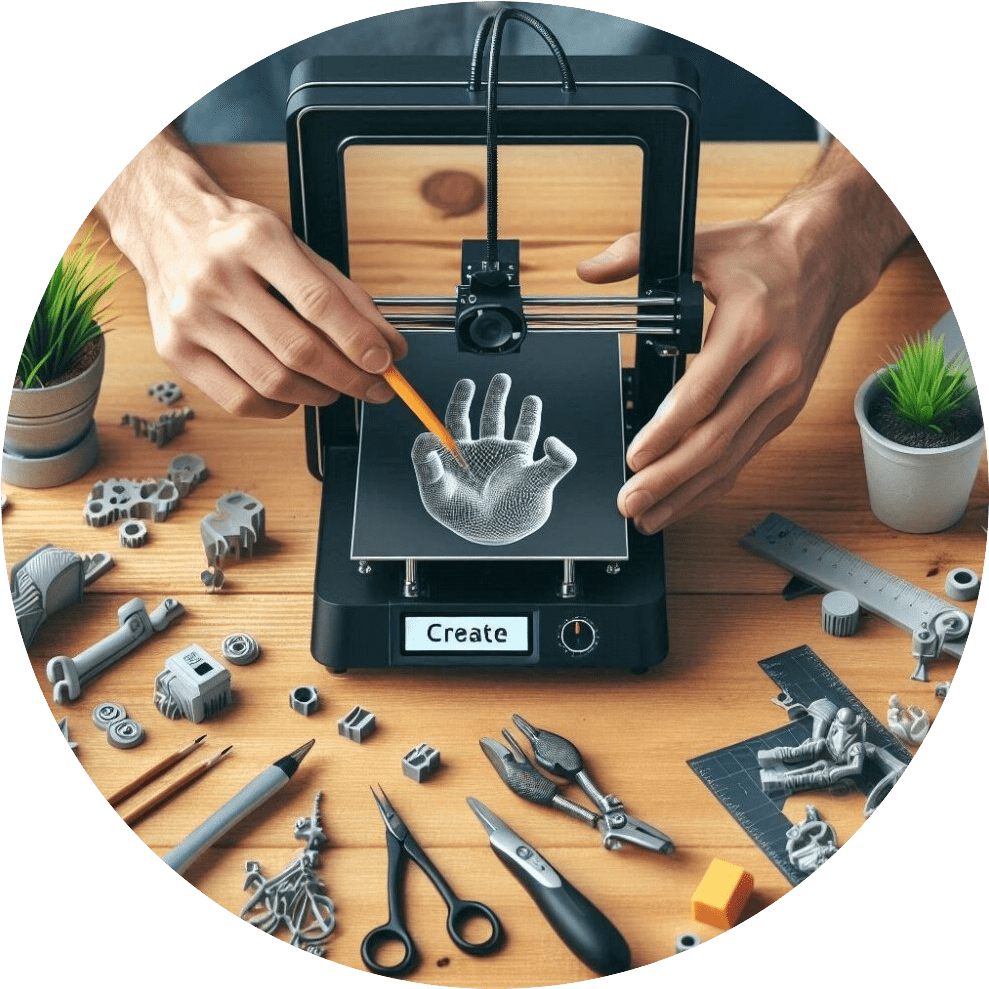
3D printing, also called additive manufacturing, creates an object from digital model data by adding material in successive layers or deposits.
In a typical desktop workflow, a user begins with a 3D model, exports it as a printable file, and opens it in slicing software. The slicer divides the model into layers and creates the instructions the machine follows.
Industrial systems use more advanced versions of the same digital workflow, often with stricter material controls, process monitoring, heat treatment, inspection, and part qualification.
The key advantage is not that 3D printing replaces every traditional process. Its value appears when a part needs customization, complex internal geometry, rapid iteration, low-volume production, reduced tooling, or manufacturing close to the point of use.
Injection molding still makes sense for many high-volume plastic products. Machining remains essential for precise surfaces and demanding materials. Casting, forming, welding, and other conventional processes are not disappearing.
The future is increasingly hybrid: designers and manufacturers choose the process—or combination of processes—that best suits the part.
3D Printing vs. Machining vs. Injection Molding
| Decision Factor | 3D Printing | Machining | Injection Molding |
|---|---|---|---|
| Best fit | Prototypes, custom parts, complex shapes and low-volume production | Precision parts, strong stock materials and critical surfaces | High volumes of repeatable plastic parts |
| Upfront tooling | Usually low | Low to moderate, depending on fixtures and programming | Often high because a mold is required |
| Design changes | Fast—revise the file and print again | Usually manageable but may require new setups | Potentially costly if the mold must change |
| Per-part economics | Strongest at low volume or high customization | Strong for precision and many engineering materials | Strongest after volume spreads out tooling cost |
| Main limitation | Build time, anisotropy, surface finish and process variability | Material removal, tool access and geometry constraints | Tooling lead time, minimum economical volume and design lock-in |
You can explore that connection further in Hybrid Manufacturing: A New Era of Innovation in Production.
The Seven Major Additive-Manufacturing Processes
Current international terminology groups additive manufacturing into seven major process categories. ISO/ASTM 52900:2021 was reviewed and confirmed as current in 2025. Individual technologies and commercial names sit inside these broader categories.
| Process Category | How It Works | Common Materials | Typical Uses |
|---|---|---|---|
| Material Extrusion | Material is pushed through a nozzle and deposited along a programmed path. | PLA, PETG, ABS, ASA, TPU, nylon and composites | Functional parts, prototypes, fixtures, tools and desktop printing |
| Vat Photopolymerization | Light selectively cures liquid photopolymer resin. | Standard, tough, flexible, castable and dental resins | Dental models, miniatures, jewelry patterns and detailed prototypes |
| Powder Bed Fusion | Thermal energy selectively fuses regions of a powder bed. | Polymers and metals | Aerospace components, medical implants and durable production parts |
| Binder Jetting | A liquid bonding agent is selectively deposited onto powdered material. | Sand, metals and ceramics | Casting molds, cores, ceramic parts and metal components requiring post-processing |
| Material Jetting | Droplets of build material are deposited and cured or solidified. | Photopolymers, waxes and specialized materials | Detailed visual models, dental work and multi-material prototypes |
| Directed Energy Deposition | Focused energy melts material as it is deposited onto a surface. | Metal powder or wire | Repair, feature addition, large metal parts and near-net-shape production |
| Sheet Lamination | Sheets of material are bonded and shaped layer by layer. | Paper, polymers, composites and metals | Models, tooling, laminates and specialized industrial parts |
Which Process Matters Most to Home Users?
Material extrusion—often called FDM or FFF—is still the most familiar choice for home workshops, schools, small businesses, and practical prototyping.
It offers relatively affordable machines, widely available filament, large build-volume options, and the ability to make useful objects without the liquid resin handling required by vat-photopolymerization systems.
Resin printing can produce finer detail, but it brings additional ventilation, skin-contact, cleaning, curing, and waste-handling responsibilities. High detail does not automatically make resin the better process for a functional bracket, large enclosure, or workshop fixture.
3D Printing Materials Have Become More Application-Specific
Choosing a material by name alone is not enough. A useful material decision should account for temperature, load, impact, flexibility, UV exposure, chemicals, appearance, printer capability, and the direction of force on the finished part.
| Material | Why People Use It | Watch For | Good Starting Uses |
|---|---|---|---|
| PLA | Easy printing, low warping and good detail | Limited heat resistance and possible brittleness in demanding service | Models, organizers, test fits and indoor parts |
| PETG | Useful balance of durability, chemical resistance and printability | Stringing, moisture sensitivity and excessive nozzle-to-bed squish | Functional household parts, brackets and containers |
| ABS | Toughness, temperature resistance and post-processing options | Warping, odor and the need for better enclosure and ventilation control | Enclosed-machine parts and functional components |
| ASA | Weather and UV resistance with ABS-like properties | Warping, fumes and enclosure requirements | Outdoor brackets, housings and fixtures |
| TPU | Flexibility and impact absorption | Slower printing and more demanding filament handling | Feet, bumpers, grips, straps and protective parts |
| Nylon | Toughness, wear resistance and useful mechanical performance | Strong moisture absorption and more demanding print conditions | Gears, hinges, tools and durable functional parts |
| Photopolymer Resin | Fine detail and smooth surfaces | Uncured-resin exposure, cleaning, curing and brittle formulations | Miniatures, dental models, molds and detailed prototypes |
| Metal Feedstocks | High-performance components and complex internal geometry | Specialized equipment, qualification, powder handling and post-processing | Aerospace, medical, tooling and industrial production |
A note about PLA: PLA is often described as biodegradable, but that wording can be misleading. It generally requires controlled industrial composting conditions and should not be assumed to break down quickly in a backyard compost pile, landfill, or natural environment.
Need Reliable Filament for Practical Prints?
COEX offers U.S.-made PLA, PETG, ABS, ASA and specialty filament options. Use code 3DPRINTINGBYKEVIN for 15% off eligible filament purchases.
The P.R.I.N.T. Method™
Better 3D printing starts before the machine moves. The P.R.I.N.T. Method is the practical planning framework I use to connect the design, material, settings, and finished job.
Problem
Define exactly what the part must accomplish. Start with the need—not the printer, filament or model.
Requirements
Identify load, heat, weather, flexibility, appearance, expected lifespan and safety needs.
Interfaces
Measure every location where the part must fit, clip, slide, screw, support, touch or clear another object.
Next-Best Materials and Methods
Choose the most sensible material, orientation, wall count, infill, nozzle, supports and profile.
Test and Tune
Print a prototype, inspect it honestly and change one variable at a time until the part works.
Consider a bracket that will live outdoors. The model may look simple, but the real requirements include sunlight, temperature swings, water, screw forces, load direction, and long-term movement.
The P.R.I.N.T. Method pushes those questions to the beginning, where they can guide the design and material choice instead of becoming reasons for failure later.
Kevin’s shop perspective: After eight years of 3D printing and modeling, I have learned that the machine is rarely the whole answer. Fit, orientation, wall strategy, material condition, tolerance, and a willingness to test usually decide whether a print becomes a dependable part or an expensive lesson.
Where Is 3D Printing Being Used Now?
The most meaningful progress is happening where additive manufacturing solves a specific production problem—not where it is used simply because printing looks futuristic.
Medical Devices and Dental Work
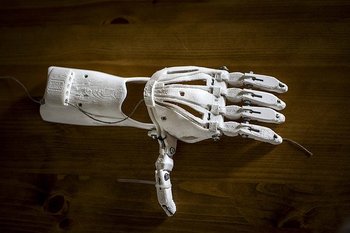
The FDA lists applications that include orthopedic and cranial implants, surgical instruments, dental restorations and external prosthetics. Medical applications require rigorous design controls, testing, material characterization and regulatory review.
Aerospace and Space Systems
Aerospace programs use metal additive manufacturing to reduce part count, consolidate complex geometries, shorten development cycles and create components that would be difficult to manufacture conventionally. In 2025, NASA reported ongoing testing of small metal parts printed in microgravity, alongside research into plastics, recycled feedstocks, simulated lunar regolith and bioprinting.
Automotive and Industrial Tooling
Manufacturers use 3D printing for jigs, fixtures, assembly aids, prototypes, tooling, replacement components and selected production parts.
Small Businesses and Local Production
Small shops can create prototypes, custom holders, replacement parts, short production runs and job-specific tools without investing in dedicated molds.
Education and Makerspaces
Students can move from a digital model to a physical test, helping connect geometry, measurement, engineering, design iteration and problem-solving.
Construction and Large-Scale Deposition
Large-format systems are being studied and developed for structural, infrastructure and architectural applications, but standards, testing, reinforcement and code compliance remain essential.
The Rise of Digital Inventory
A traditional inventory stores physical objects. A digital inventory stores approved design files, process instructions, material requirements and revision data until a part is needed.
That can reduce the need to warehouse some low-volume items, but it also creates new responsibilities. Files must be protected, revisions controlled, printers qualified, and materials verified. Printing the wrong version locally is still printing the wrong part.
What Is Driving 3D Printing Forward in 2026?
1. Smarter Process Monitoring
Cameras, sensors, machine learning, digital twins and better production data are being developed to detect problems earlier and improve repeatability. The NIST AI2AM project, updated in May 2026, is working toward better process assurance, quality assurance and “first part correct” outcomes.
In metal printing, researchers are also pairing thermal data, X-ray imaging and machine learning to identify internal defects earlier. In industrial additive manufacturing, the long-term goal is not simply faster printing. It is producing parts with enough process evidence that manufacturers can trust and qualify the result.
2. Faster, More Automated Desktop Printing
Desktop machines increasingly combine automated calibration, resonance compensation, pressure control, network monitoring and reusable material profiles.
These tools can reduce setup work, but they do not eliminate the need to understand first layers, filament condition, model orientation, wall strength and part requirements.
Exploring a Modern Creality 3D Printer?
Creality offers entry-level, enclosed, large-format and higher-speed printer options. Compare the machine’s build volume, material support, enclosure, repairability and workflow against the work you actually plan to do.
Kevin’s advice: Do not buy for one impressive demo print. Buy for the type of problem you expect to solve six months from now.
3. Multi-Material and Multi-Color Workflows
Multi-material systems are expanding what desktop users can create. They can introduce color changes, soluble or breakaway support strategies, identification markings and combinations of material behavior.
The tradeoffs include purge waste, longer print times, added mechanical complexity and more profile management. More colors do not automatically create a better functional part.
4. Better Materials for Specific Jobs
The material market is moving beyond generic labels. Users can choose formulations aimed at weather resistance, flame behavior, electrostatic control, stiffness, impact performance, flexibility, low friction or easier support removal.
However, a specialty filament name is not proof that a finished component meets a regulatory or engineering requirement. Critical parts still need appropriate testing and documentation.
5. Standards and Qualification
As additive manufacturing moves into more demanding applications, standards are becoming increasingly important for terminology, feedstock, equipment performance, data, design, post-processing, inspection and part qualification.
This is one reason the industry is becoming more mature. The conversation is shifting from “Can this be printed?” to “Can this be printed consistently, measured correctly and trusted in service?”
6. More Practical Small-Batch Production
3D printing is especially useful when a business needs dozens or hundreds of customized or frequently revised parts rather than hundreds of thousands of identical parts.
It can shorten the gap between design change and physical production because there is no dedicated mold to modify. That advantage becomes even stronger when a part’s value comes from customization or rapid delivery.
7. Properties Designed Into the Part
A notable 2026 research direction is the ability to vary material behavior within one printed object. The U.S. Department of Energy described a research method called CRAFT that uses controlled light intensity to influence crystallinity and tune characteristics such as strength, flexibility and durability during printing.
This is emerging research, not a feature most desktop buyers can use today. Its importance is the direction it points: future parts may be designed not only by shape and material name, but also by where specific properties are placed inside the object.
Safety Has to Grow With the Technology
A printer may fit on a desk, but that does not make every material or workflow harmless.
Desktop 3D printers can release ultrafine particles and chemical emissions. Exposure varies by material, printer, temperature, enclosure, ventilation and operating conditions. The NIOSH safe 3D-printing guide summarizes research and recommended controls for makerspaces, schools, libraries and small businesses.
Practical Safety Basics
- Use the printer in a well-planned, ventilated area.
- Follow the printer and material manufacturer’s safety instructions.
- Consider an enclosure and appropriate filtration or local exhaust.
- Avoid placing long-running printers in sleeping areas or tightly occupied rooms.
- Keep hands away from hot ends, heated beds, belts and moving components.
- Do not leave a printer completely unattended without appropriate safeguards.
- Store filament dry and away from contamination.
- Use suitable gloves and eye protection when handling uncured resin.
- Cure and dispose of resin-contaminated waste according to applicable instructions and local requirements.
Schools, libraries, makerspaces and small businesses should treat ventilation, placement, training and maintenance as part of the equipment plan—not as afterthoughts.
Is 3D Printing More Sustainable?
Sometimes—but not automatically.
Additive manufacturing can reduce material removal, consolidate multiple parts into one, produce lightweight geometry, support local manufacturing, and reduce the need for dedicated tooling.
On the other hand, failed prints, support material, purge waste, energy use, difficult-to-recycle polymers, resin waste and short-lived novelty objects can offset those benefits.
The practical sustainability question is not “Was it 3D printed?” It is “Did this process use the right material and amount of energy to create a durable object that serves a real purpose?”
Better design, repairable products, longer part life, fewer failed prints, responsible material selection and realistic recycling plans matter more than a broad claim that additive manufacturing is always green.
What Comes Next?
The next stage of 3D printing will be shaped by better integration rather than one dramatic breakthrough.
- More dependable automation: calibration and monitoring that reduce routine failures without hiding the process from users.
- Application-driven materials: formulations selected for real heat, weather, strength, wear and safety requirements.
- Stronger digital workflows: secure files, controlled revisions and traceable production data.
- Improved qualification: clearer evidence that industrial parts meet dimensional and mechanical requirements.
- Hybrid production: additive manufacturing combined with machining, molding, forming and finishing.
- Better education: teaching design decisions and safe workflows—not merely how to download and print a file.
- Repair-focused design: replacement components and digital inventories that can extend product life where appropriate.
For everyday makers, the biggest opportunity may be simpler: the ability to solve a local problem without waiting for a mass-produced solution.
A well-designed bracket, replacement clip, tool holder, prototype or small production fixture may not make headlines. It can still save time, prevent waste, keep equipment working and turn a digital idea into something genuinely useful.
Practical Tips for New 3D Printer Owners
- Start with PLA: It is generally a forgiving way to learn material extrusion.
- Choose small test prints: Learn from a 30-minute test before committing to a 20-hour job.
- Clean the build plate: Finger oils and residue can undermine first-layer adhesion.
- Dry the filament: Moisture can cause poor surfaces, popping, stringing and inconsistent extrusion.
- Preview the sliced file: Check supports, walls, gaps and layer behavior before printing.
- Watch the first layer: Stop early if the foundation is clearly failing.
- Change one variable at a time: Multiple simultaneous changes make troubleshooting harder.
- Measure the finished part: A print that looks good can still be dimensionally wrong.
- Use the P.R.I.N.T. Method: Start with the problem and requirements before choosing settings.
For a deeper look at strength, print time and material use, see 3D Print Infill Density for Strength, Speed, and Savings.
Quick 3D Printing Glossary
Additive Manufacturing
A production approach that creates parts by adding material from digital model data.
Filament
Spooled feedstock used by many material-extrusion printers.
Slicer
Software that converts a 3D model into machine instructions and applies print settings.
G-code
A common instruction format used to control printer movements, temperatures and related actions.
Infill
The internal structure inside many printed parts. It is only one factor in finished-part strength.
Wall or Perimeter
The outer shells of a print. For many functional parts, wall count matters more than extreme infill.
Supports
Temporary printed structures used beneath overhangs or difficult geometry.
Layer Height
The thickness of each printed layer. It affects detail, surface appearance and print time.
Knowledge Check: Can You Choose the Practical Path?
Test the ideas in this guide. The answers remain hidden until you open them.
1. A business needs 40 customized brackets and expects the design to change. Which process deserves the first look?
Check the answer
Answer: B. Low volume, customization and likely revisions are strong reasons to evaluate 3D printing before paying for dedicated tooling.
2. Which factor can matter more than extreme infill for a functional FDM part?
Check the answer
Answer: A. Geometry, wall count, layer orientation and load direction often have a larger effect on useful strength than simply raising infill.
3. What is the safest assumption about desktop-printer emissions?
Check the answer
Answer: C. Emissions vary with the printer, material and operating conditions, so placement and exposure controls belong in the setup plan.
4. What comes first in the P.R.I.N.T. Method?
Check the answer
Answer: B. Start with what the part must accomplish. The design, material and settings follow from the real problem and requirements.
Frequently Asked Questions
Is 3D printing still growing in 2026?
Yes. Growth is occurring across industrial production, medical devices, aerospace, tooling, small-batch manufacturing, education and increasingly capable desktop systems. Adoption still depends on whether the process offers a real advantage for the part.
What type of 3D printer is best for a beginner?
A material-extrusion printer with reliable automatic calibration, readily available replacement parts, a strong user community and profiles for common filaments is often the most approachable starting point. The right choice also depends on build volume, enclosure needs and intended materials.
Is resin printing better than filament printing?
Resin printing is often better for fine detail and smooth small models. Filament printing is usually more practical for larger objects, functional prototypes, brackets, fixtures and general workshop use. The better process depends on the job.
Can 3D-printed parts replace manufactured parts?
Sometimes. A replacement must be evaluated for fit, load, temperature, wear, weather exposure and failure consequences. Safety-critical parts require appropriate engineering, testing and approval.
Does more infill always make a part stronger?
No. Material, wall count, print orientation, geometry, layer bonding and load direction can matter as much as—or more than—infill percentage.
What is the P.R.I.N.T. Method?
It is the 3D Printing by Kevin practical framework: Problem, Requirements, Interfaces, Next-Best Materials and Methods, and Test and Tune. It helps users plan the part before choosing settings.
Authoritative Sources and Further Reading
- ISO/ASTM 52900:2021 — Additive Manufacturing Fundamentals and Vocabulary
- NIST — Advanced Informatics and Artificial Intelligence for Additive Manufacturing
- FDA — 3D Printing of Medical Devices
- NASA — 3D Printing: Saving Weight and Space at Launch
- NIOSH — Approaches to Safe 3D Printing
- U.S. Department of Energy — Detecting 3D-Printing Defects in Real Time
- U.S. Department of Energy — CRAFT Technology for Tunable Printed Properties
The Future of 3D Printing Is Practical
The most important 3D-printing progress is not measured by how futuristic a machine looks. It is measured by whether the finished part fits, functions, lasts and solves the intended problem.
Which 3D-printing change feels most useful in your workshop or business? Share your experience or question in the comments.