
Engineers rely on carbon-fiber-reinforced nylon for high-stress 3D-printed prototypes. Learn why it outperforms PLA, PETG, and ABS.

Carbon-fiber-reinforced nylon is trusted for high-stress prototypes because it combines exceptional strength, stiffness, heat resistance, and dimensional stability—making it ideal for functional engineering parts, not just visual models.
Why “Prototype” Means Something Different to Engineers
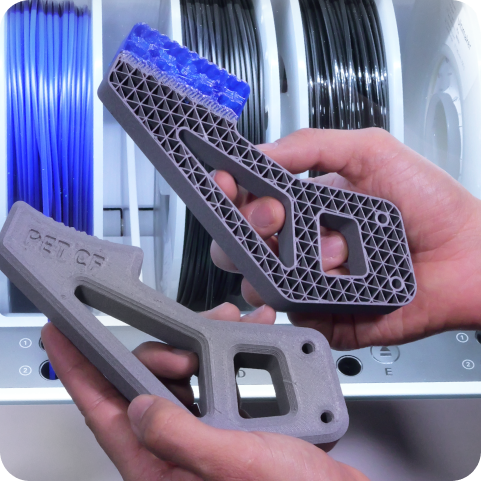
In hobbyist circles, a prototype is often a visual placeholder.
In engineering, a prototype must behave like the final part.
That means it must survive:
- Mechanical load
- Repeated stress cycles
- Elevated temperatures
- Tight tolerances
PLA, PETG, and even ABS fail quickly once real forces enter the equation. Engineers need a material that bridges the gap between plastic mockups and machined components.
That’s where carbon-fiber-reinforced nylon earns its reputation.
What Makes Carbon-Fiber Nylon Different
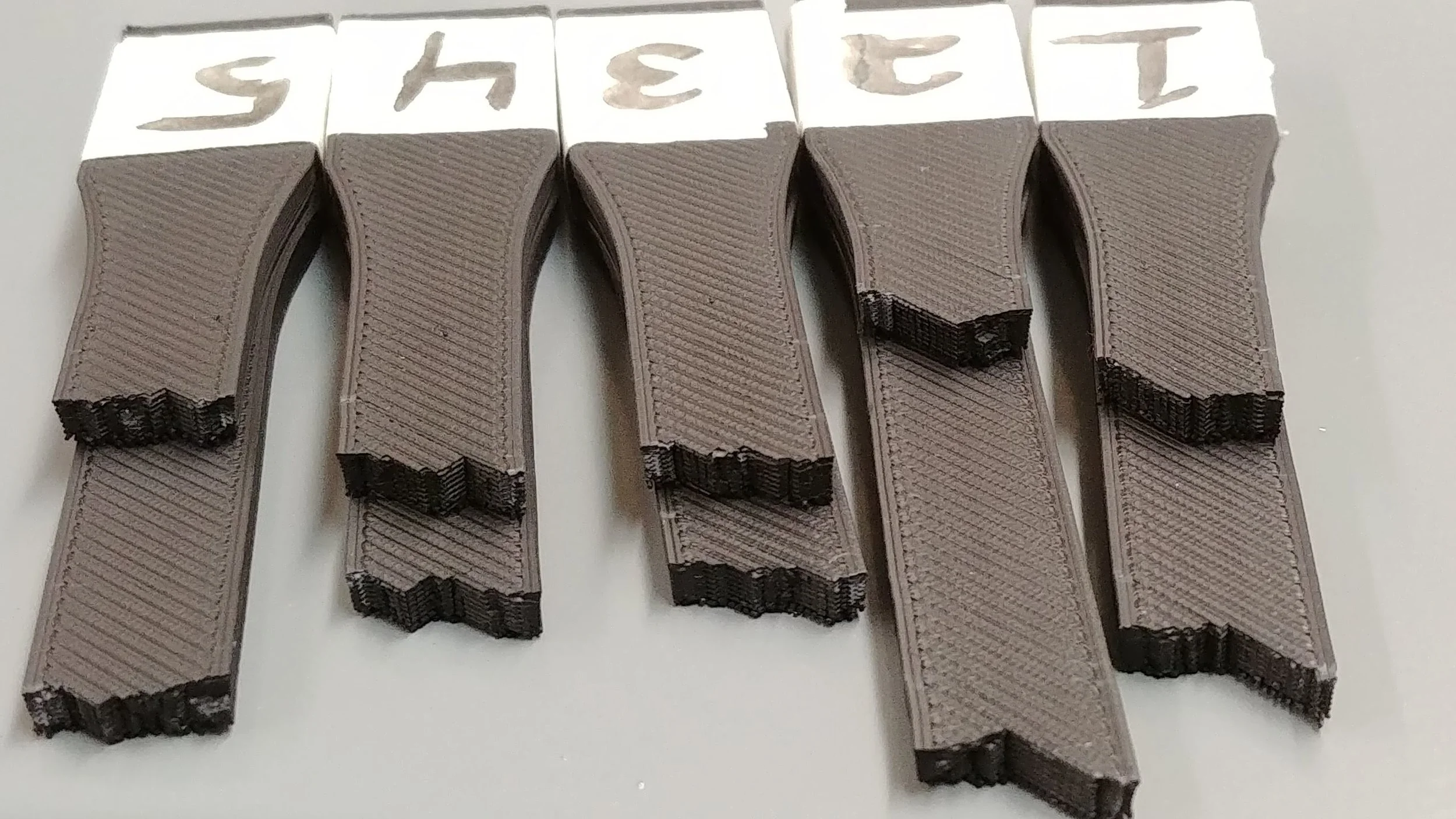
Carbon-fiber nylon isn’t just nylon with filler. It’s a composite engineering material designed to perform under stress.
Key Performance Advantages
- High tensile strength for load-bearing parts
- Exceptional stiffness with minimal flex
- Improved heat resistance compared to standard nylons
- Low warping and shrinkage for dimensional accuracy
- Superior layer adhesion when printed correctly
This combination makes it suitable for brackets, jigs, fixtures, housings, and mechanical interfaces that actually get used.
Comparison Table: Engineering Materials at a Glance
| Material | Strength | Heat Resistance | Dimensional Stability | Real-World Use |
|---|---|---|---|---|
| PLA | Low | Poor | High | Visual models |
| PETG | Moderate | Moderate | Moderate | Light-duty parts |
| ABS | Moderate | Moderate | Low | Enclosures |
| Nylon (PA) | High | High | Moderate | Functional parts |
| Carbon-Fiber Nylon | Very High | High | Very High | High-stress engineering prototypes |
Why Engineers Prefer It for High-Stress Prototypes
1. It Behaves Like an End-Use Material
Carbon-fiber nylon doesn’t just look the part—it responds to stress predictably. That makes it invaluable for validating designs before committing to tooling or CNC work.
2. It Reduces Iteration Costs
When prototypes fail too easily, engineers compensate by over-engineering. A stronger material allows accurate testing earlier in the design cycle.
3. It Maintains Tolerances Under Load
Carbon fiber reduces nylon’s natural flexibility, helping parts retain shape even when stressed.
This is critical for:
- Alignment fixtures
- Mounting brackets
- Structural housings
Printing Requirements (What Engineers Know That Beginners Don’t)
Carbon-fiber nylon is not difficult—but it demands proper hardware.
Minimum Recommended Setup
- Hardened steel nozzle (carbon fiber is abrasive)
- Enclosed printer for thermal stability
- Dry filament storage (nylon absorbs moisture fast)
- Reliable extrusion and consistent temperatures
If you’re printing functional parts professionally, these are already non-negotiable.
Printers Engineers Trust for Carbon-Fiber Nylon
For consistent results with abrasive engineering filaments, hardware matters.
Reliable Options for Engineering Workflows
- Creality — Known for enclosed, high-temperature-capable platforms suitable for advanced materials
👉 Explore current models via my affiliate link: https://tidd.ly/3KUghXJ - 3DMakerpro — Excellent for precision-focused workflows and professional prototyping
👉 Global affiliate access: https://tidd.ly/49ziphJ - HONG KONG CHAORONG CO., LIMITED — Industrial-grade solutions and materials
👉 Learn more: https://tidd.ly/4oBR0PW - COEX — Trusted for high-performance filament consistency
👉 Partner page: https://coex3d.com/3DPRINTINGBYKEVIN
All links are provided ethically and support this site at no extra cost to you.
Real-World Applications Engineers Actually Use
Carbon-fiber nylon isn’t theoretical. It’s used daily for:
- Production jigs and fixtures
- Structural brackets
- Load-bearing mounts
- Robotic components
- Automotive test parts
These are working components, not desk models.
Questions Engineers Ask
Is carbon-fiber nylon stronger than ABS?
Yes. It offers significantly higher stiffness, better heat resistance, and superior fatigue performance.
Can carbon-fiber nylon replace metal parts?
In many low-to-moderate load applications, yes—especially for fixtures, housings, and brackets.
Is carbon-fiber nylon difficult to print?
Not with the right setup. Enclosure, dry filament, and hardened nozzles are the keys.
Is it worth the higher cost?
For engineering prototypes, absolutely. It reduces failed prints, redesign cycles, and inaccurate testing.
Why Engineers Trust It—and Keep Coming Back
Engineers don’t choose materials based on hype.
They choose them based on failure rates.
Carbon-fiber-reinforced nylon consistently delivers:
- Predictable strength
- Dimensional accuracy
- Real-world durability
That’s why it’s trusted for high-stress prototypes—and why it continues to replace weaker plastics in serious design workflows.
If you want deeper guidance on engineering-grade 3D printing, material selection, or printer tuning, explore more resources here on 3DPrintingByKevin.com, where every recommendation is based on real-world testing—not marketing claims.
US Store-New Product Launch: SPARKX i7