
Disclosure: This post may contain affiliate links. If you purchase through these links, I may earn a commission at no additional cost to you.
The Breakdown: The gap between industrial manufacturing and home 3D printing has collapsed. The convergence of CoreXY high-speed printing and accessible metrology-grade scanning now allows hobbyists to reverse engineer parts and run small-batch production lines from a desktop, effectively turning a spare room into a micro-factory.
For decades, the distinction was clear: factories had million-dollar injection molding machines and engineering teams, while hobbyists had slow, finicky 3D printers that struggled to produce consistent results. That line has not just been blurred; it has been erased.
A quiet revolution is occurring in the additive manufacturing space. It is not driven by a single corporate giant, but by the rapid democratization of two specific technologies: high-speed kinematics and precision digital capture. When combined, these tools give a single individual the creative and productive power that was once the exclusive domain of industrial facilities.
We are no longer just printing plastic trinkets. We are entering the age of the “desktop industrialist,” where the ability to design, iterate, and manufacture functional end-use parts is accessible to anyone with a few hundred dollars and a desire to learn.
The Speed of Production: Scaling Up
The first pillar of this breakthrough is speed. In the past, printing a functional prototype might take 14 hours. If the fit was wrong, you lost a day. This made iteration painfully slow and production impossible.
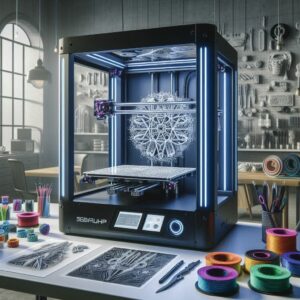
Newer machines utilizing Klipper firmware and CoreXY kinematics have slashed these times by up to 70%. Suddenly, that 14-hour print takes 4 hours. This shift allows for small-batch production runs that are actually viable. You can now produce ten units in the time it used to take to produce two, turning a hobby printer into a manufacturing cell.
Turn Your Desk into a Factory
Speed is the new standard. Creality has championed this shift with the K1 series and Sonic Pad upgrades, bringing industrial speeds to the consumer market at a fraction of the traditional cost.
View Creality High-Speed Options
Reverse Engineering: The Missing Link
Factories do not just make things; they analyze existing parts to improve them. This is called reverse engineering, and until recently, it required laser scanners costing upwards of $20,000.
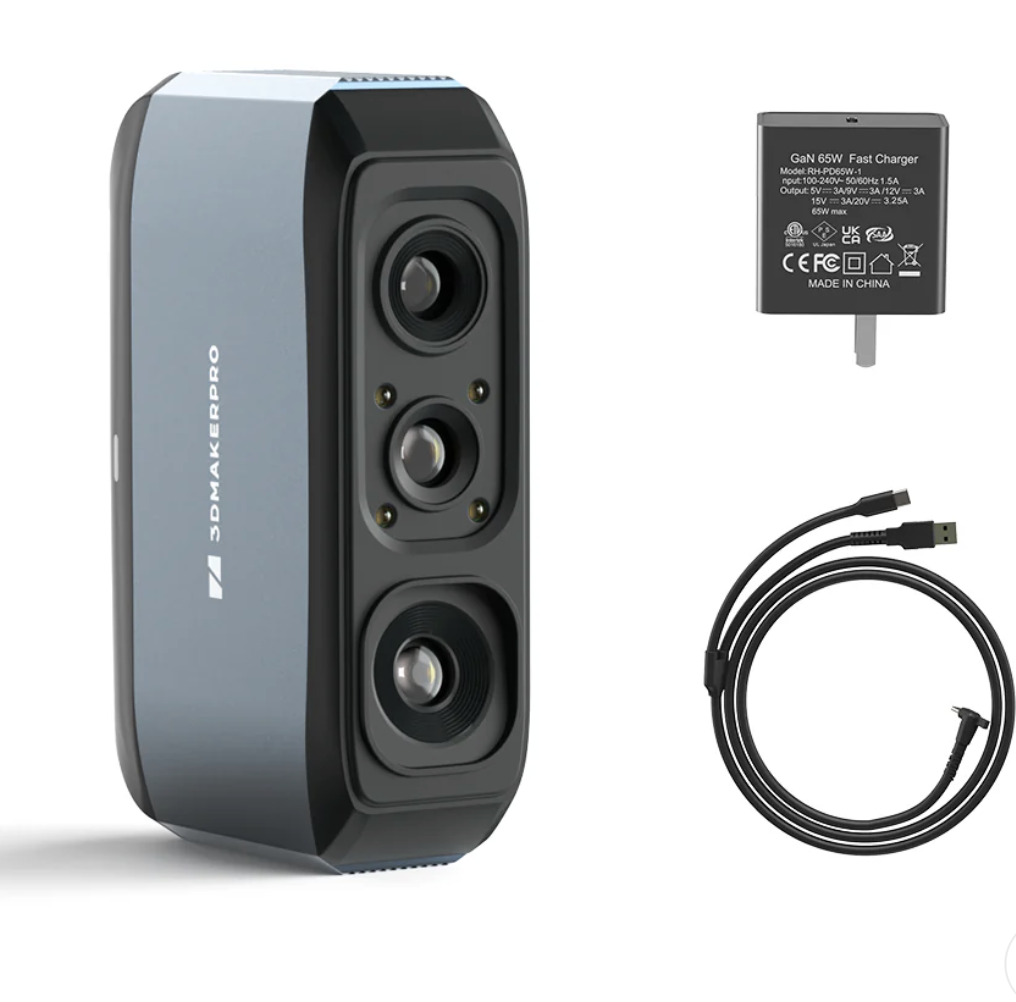
This barrier has fallen. Affordable, high-fidelity 3D scanners now allow hobbyists to digitize real-world objects with sub-millimeter precision. Whether you are reproducing a broken car part that is no longer manufactured or designing a custom enclosure that fits perfectly around an existing tool, the workflow has changed. You scan the object, import the mesh, and design around it.
This capability transforms the 3D printer from a novelty into a functional repair station. It closes the loop between the physical world and the digital workspace.
Digitize the World
Unlock the power of reverse engineering. 3DMakerpro provides the precision scanning tools needed to turn physical objects into editable 3D models efficiently.
The Micro-Factory Workflow
When you combine these two technologies, a powerful workflow emerges:
- Capture: Scan a broken or reference part using a handheld scanner.
- Iterate: Modify the digital file for strength or improved utility.
- Produce: Print the part at high speeds using advanced materials like ABS or ASA.
This is the exact process used by engineering firms, scaled down to the desktop. The hardware is no longer the limiting factor; the only limit is the user’s imagination and skill. By mastering these tools, hobbyists are securing their independence from supply chains and becoming self-sufficient manufacturers.
Frequently Asked Questions
For mass production (thousands of units), no. But for “low volume high mix” production (1-500 units), modern high-speed printers are often faster and cheaper because they require no tooling costs.
It has become much easier. Modern scanners from brands like 3DMakerpro use AI-assisted software to stitch frames together automatically, making the process similar to taking a panoramic video.
CoreXY printers keep the print bed stationary (or moving only vertically), while the print head moves rapidly on X and Y axes. This reduces vibration and mass movement, allowing for significantly higher print speeds without quality loss.