
Last reviewed September 11, 2026.
A tiny plastic part can create a surprisingly big problem.
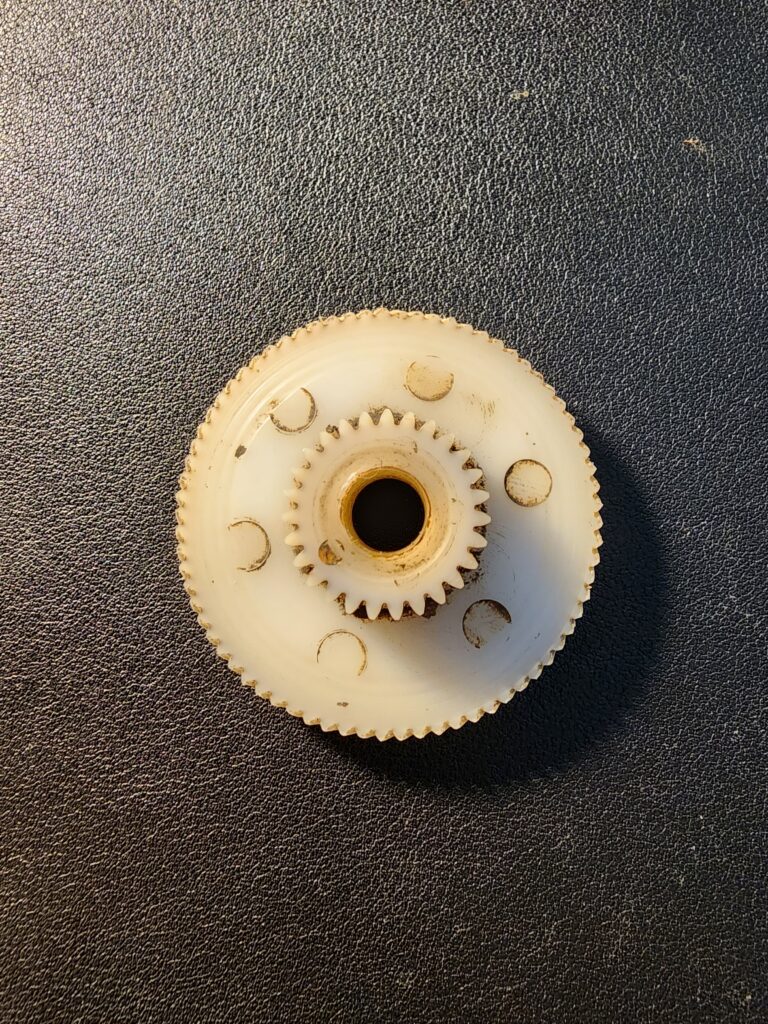
The appliance still works. The tool is fine. The machine is usable. But one clip snapped, one bracket cracked, one gear wore down, or one oddly specific mount disappeared—and the replacement is backordered, discontinued, or buried somewhere in an online marketplace.
That is where local 3D printing can become much more useful than simply ordering another piece of plastic.
If you need a small custom, broken, discontinued, or hard-to-find plastic part, local 3D printing can shorten the path from problem to testable replacement. The biggest advantage is not simply avoiding shipping. It is being able to evaluate the original part, measure critical features, choose an appropriate material, test the fit, and make a deliberate revision when necessary.
If the correct factory replacement is readily available and reasonably priced, buy it. Custom printing makes the most sense when the normal replacement path has stopped making sense.
Have Kevin Review Your Part Learn What to Measure First
The Package Tracking Number Is Not Always the Real Problem
It is easy to frame this as a shipping problem: the part is somewhere else, you need it here, and the carrier is taking too long.
Sometimes that really is the issue. But with discontinued and custom parts, the harder problem often comes before shipping.
The part you need may no longer exist.
Or perhaps a replacement exists, but it is for the wrong model year, wrong revision, wrong hole spacing, or wrong mounting arrangement. Ordering three nearly identical parts and hoping one fits is not much of a repair strategy.
Local 3D printing changes the question from:
“Where can I buy this?”
to:
“What does this part need to do, and can we make a practical replacement?”
That distinction matters.
When Local 3D Printing Makes More Sense
The Part Is Discontinued
You have the original component, broken pieces, photographs, measurements, or the mating assembly—but the manufacturer no longer sells the part.
The Fit Is Specific
A generic bracket, holder, spacer, adapter, or clip is close, but “close” is not enough for the real mounting points or clearances.
You Need to Test It
The first physical part needs to be checked against the real assembly before committing to more copies or a finished version.
The National Institute of Standards and Technology identifies low-volume manufacturing, customization, rapid iteration, end-of-life components, and repair parts as areas where additive manufacturing can offer practical advantages.
Read NIST’s overview of additive manufacturing benefits.
Local 3D Printing vs. Ordering Online vs. Doing It Yourself
| Option | Best When | Main Advantage | Main Limitation |
|---|---|---|---|
| Buy the OEM part | The correct replacement is still available | Known design and intended fit | May be discontinued, backordered, or unavailable separately |
| Local custom 3D printing | The part is unusual, discontinued, damaged, or needs adaptation | Direct review, measurement, test fitting, and revision | Custom work may require modeling and more than one iteration |
| Online print service | You already have a proven digital model and known requirements | Broad process and material choices | Physical test-fit feedback may require additional shipping cycles |
| Print it yourself | You own a printer and want to develop the skill | Maximum control and experimentation | You handle calibration, design, material selection, troubleshooting, and safety |
Kevin’s rule: Start with the cheapest sensible solution. If a $12 factory replacement is available and correct, ordering it is probably smarter than reverse-engineering it. Local custom printing earns its keep when an off-the-shelf answer does not solve the actual problem.
What “Local” Actually Changes
Being nearby does not magically make a weak design strong or turn every project into a same-day job.
What it can do is shorten the communication loop.
If the original component can be inspected, an uncertain feature can be discussed directly. If the first version needs a slightly different hole location or a little more clearance, the result can be evaluated against the actual assembly instead of treating each revision like an entirely separate mail-order transaction.
That can be especially useful with clips, mounts, gears, brackets, knobs, adapters, covers, spacers, organizers, and other pieces whose success depends heavily on fit.
3D Printing by Kevin is based in Independence, Kentucky and works with customers throughout Northern Kentucky and the Greater Cincinnati area, as well as suitable shipped projects.
A Real Replacement Part Is More Than an STL File
A digital model can look flawless on a monitor and still make a terrible replacement part.
The hole may be slightly undersized. A retaining tab may not flex enough. A gear may mesh too tightly. A mounting face may sit one millimeter too high. An outside curve may look perfect while the important mating surface is wrong.
That is why functional work begins with the interfaces.
If you still have the original piece, keep it—even if it is broken. Small fragments can reveal wall thickness, mounting geometry, wear patterns, ribs, snap features, and clues about why the first part failed.
For a more detailed process, see How to Measure a Part for 3D Printing.
How I Approach a Local Replacement-Part Project
What stopped working? What does the missing or damaged component actually need to restore?
The original part, broken fragments, photographs, dimensions, sketches, mating components, and existing CAD files all help.
Hole spacing, shafts, mounting faces, clips, clearances, slots, tabs, and contact surfaces usually matter more than decorative details.
Heat, sunlight, flexing, load direction, wear, weather, fasteners, and expected service life all influence the decision.
A controlled test fit can expose an uncertainty early, before unnecessary time and material are committed to the final version or additional quantity.
That same process is built into my P.R.I.N.T. Method™.
The point is simple: do not choose the printer first. Understand the part first.
Your Local-Part Planner
Use this quick planner to see whether your problem looks like a reasonable candidate for a local project review. It is a starting point—not an engineering approval or guarantee that a part can be printed safely.
Some Parts Should Not Be Treated as Casual Print Jobs
Just because a shape can be modeled does not mean a desktop FDM print is the correct replacement.
Parts connected to braking, steering, personal protection, high pressure, fire, critical electrical insulation, medical equipment, major structural loads, or other safety-critical functions deserve a much higher level of engineering and qualification.
Sometimes the right answer is an OEM component, machining, molded production, another additive-manufacturing process, professional engineering review—or deciding not to reproduce the part at all.
What About Turnaround Time?
This is where I would rather give you a realistic answer than a flashy one.
A simple part with a ready-to-print file is very different from a broken component that has to be measured, rebuilt in CAD, prototyped, fitted, revised, and printed again.
Turnaround therefore depends on the project, current print queue, design work, material, print duration, testing needs, and quantity.
Local does not mean “instant.” It means the project can stay close to the problem.
That is often much more valuable.
Already Have an STL or STEP File?
Great. That can remove part of the design work—but it does not automatically prove the model is ready for reliable production.
I still want to understand dimensions, intended use, orientation, tolerances, material requirements, and what the finished part must interact with.
Continue with From STL to Finished Part: The Guide to Reliable 3D Printing if your project already begins with a digital model.
No CAD File? That Is Fine Too.
You do not need to become a CAD expert before requesting a project review.
You can begin with the physical part, clear photographs, a sketch, measurements, broken pieces, or simply an explanation of what the component does.
For discontinued components, see Discontinued Plastic Parts Replaced with 3D Printing.
If the problem is specifically a cracked bracket or snapped clip, start with Broken Brackets and Clips Replaced with 3D Printing.
Want to Build the Part Yourself?
Some readers arrive here because they want Kevin to make the replacement. Others discover that one repair project has pushed them toward learning 3D printing for themselves.
If that sounds like you, start with the complete P.R.I.N.T. It: Practical 3D Printing for Beginners ebook and build the workflow instead of chasing random settings one at a time.
Need a Printer?
Explore current Creality equipment for home prototyping and functional printing.
Need to Capture a Shape?
3D scanning can help with difficult visible geometry, though measurement and CAD work may still be needed.
Need Filament?
COEX offers practical filament choices for makers. Use code 3DPRINTINGBYKEVIN for 15% off eligible purchases.
Affiliate disclosure: Some links above are affiliate or partner links. If you purchase through one of them, 3D Printing by Kevin may earn a commission at no additional cost to you. Recommendations are based on practical relevance, not commission size.
For anyone running a printer at home or in a small workspace, NIOSH also maintains current guidance on additive-manufacturing hazards and safe printing practices: NIOSH 3D Printing Safety Resources.
Quick Knowledge Check
1. When is buying the original replacement usually smarter than custom 3D printing?
When the correct OEM or commercial replacement is readily available, fits the product, and costs less than developing and testing a custom replacement.
2. What is the biggest advantage of working locally on a custom replacement?
Not merely avoiding shipping. The bigger advantage is shortening the feedback loop between the physical part, measurements, design decisions, test fitting, and any necessary revision.
3. Do you need an STL file before requesting a custom part?
No. A physical original, broken pieces, photographs, measurements, sketches, or the surrounding assembly can all provide useful starting information.
4. Should every broken plastic part be reproduced with desktop FDM printing?
No. Safety-critical, regulated, high-pressure, high-temperature, structural, medical, or otherwise hazardous applications may require an OEM component, another manufacturing process, professional engineering, or formal qualification.
Frequently Asked Questions
Can you make a replacement part if I only have the broken original?
Possibly. Broken originals can contain a surprising amount of useful information. Keep every piece and include photographs showing where the component fits and how it was used.
Can I bring the original part to you?
For suitable local projects, an in-person handoff can be arranged by appointment. Start with the project intake form so I can review the basic details before scheduling the next step.
How quickly can a local 3D-printed part be made?
It depends on the project. A ready-to-print model may move quickly, while reverse engineering, material selection, test fitting, revisions, long print times, or larger quantities require more time. Turnaround is discussed after the project is reviewed.
What types of parts are good candidates?
Non-safety-critical brackets, clips, knobs, mounts, holders, adapters, spacers, gears, covers, organizers, fixtures, and other low-volume plastic components can be worth evaluating when their geometry and operating requirements can be understood.
Can you make more copies after the first part works?
Often that can be evaluated after the design and process are proven. Testing one part first is usually smarter than multiplying an unverified design.
Do you only serve Northern Kentucky?
No. 3D Printing by Kevin is based in Independence, Kentucky, with local service throughout Northern Kentucky and the Greater Cincinnati area. Suitable projects can also be handled remotely and shipped.
The Part You Need May Be Closer Than the Warehouse
A missing plastic part does not automatically mean the entire product has reached the end of its life.
Sometimes the original replacement is still the smartest answer. Sometimes an online service is the right choice. Sometimes the project should not be 3D printed at all.
But when the component is discontinued, unusually specific, difficult to source, or needs to be tested against the real assembly, local 3D printing gives you another path.
Start with the problem. Understand the interfaces. Make the simplest sensible part. Test it.
When replacement parts disappear, we make the next one.
Start a Project Review See More Replacement-Part Examples
Have you ever waited days for a tiny replacement part—or discovered that the manufacturer stopped making it entirely? Tell me what broke in the comments. Those oddly specific little failures are often exactly where 3D printing gets interesting.
