
A spool can look inexpensive until it costs you a second print. But paying more is only worthwhile when the material earns its place in your workflow.
For me, COEX is a filament brand I keep coming back to. I value predictable printing, useful material choices, and being able to focus on what the finished part needs to do.
Quick Answer: Why I Keep Buying COEX Filament
COEX stays in my rotation because consistency matters in practical printing. My recommendation is to start with one spool of the right material, test it on your printer, and judge the finished parts before buying more.
The deciding question: Does this spool help you produce repeatable, usable parts at a reasonable total cost?
COEX partner disclosure: I am a COEX partner. Purchases through my partner link or reader code may earn me a commission at no extra cost to you. This article explains my personal buying priorities; it does not present a controlled comparison of failure rates or strength across filament brands.
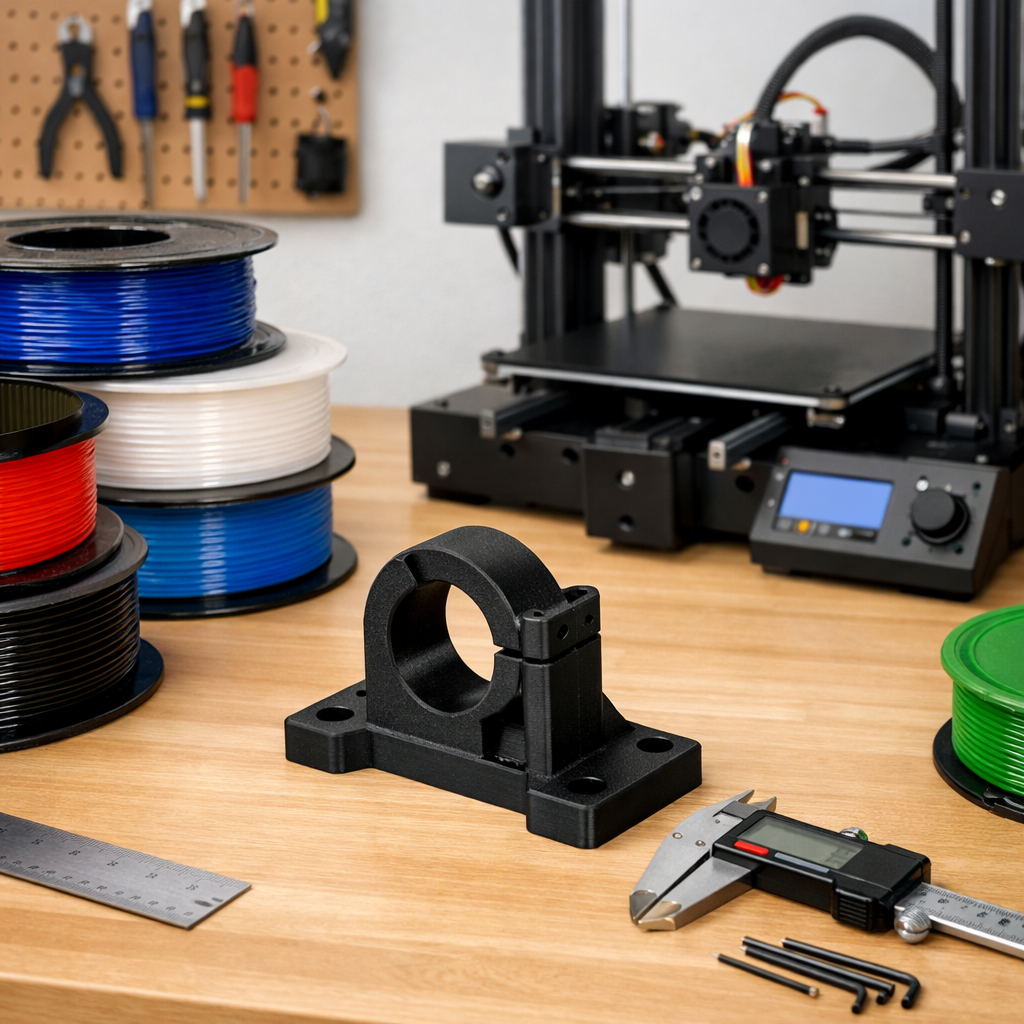
What Makes a Filament Brand Worth Buying Again?
The most useful filament is one I can understand and work with repeatedly. A good-looking first print is encouraging; repeatable fit, finish, and function are what make a spool worth reordering.
COEX suits those priorities for me. That preference does not mean every COEX formulation fits every project, or that a lower-priced brand cannot do the job well.
Repeatable results
I want a material and profile combination I can return to, with a manageable amount of checking when I open the next spool.
Materials with a purpose
An indoor organizer, outdoor cover, and flexible foot have different requirements. Brand loyalty should leave room for those differences.
Useful documentation
Clear product information and starting settings help me make a sensible first test and keep notes I can use again.
COEX describes its manufacturing operation as based in Green Bay, Wisconsin, and lists PLA, PETG, ABS, ASA Prime, and flexible CoexFlex materials among its offerings. Those are manufacturer-provided details; they help explain the range, but do not establish that one brand outperforms another. See COEX’s material range and company information.
Choose the Material Before You Choose the Brand
A dependable spool of the wrong plastic is still the wrong choice. I start with heat, sunlight, load, fit, and whether the part needs to bend.
The examples below are starting points for ordinary, noncritical projects. The exact formulation, geometry, layer direction, and printing conditions still need to match the job.
| Material | Where I would consider it | What to check first |
|---|---|---|
| PLA | Indoor organizers, display pieces, fit models, and rigid parts away from heat. | Basic PLA has limited heat resistance. A hot vehicle or sun-heated location can rule it out. |
| PETG | Utility covers, holders, and parts that benefit from toughness and some flexibility. | Flexing may be undesirable in a precise mount. Check drying, stringing, and build-plate compatibility. |
| ASA | Outdoor covers and fixtures where sunlight and weather resistance matter. | Plan for warping control, a suitable printer setup, and emissions control. Verify the exact grade’s limits. |
| Flexible TPE | Feet, grips, bumpers, and other parts that need compliance. | Check hardness and feed-path compatibility. COEX calls its flexible range CoexFlex TPE; use the exact product’s guidance. |
Material references: Prusa’s guides to PLA, PETG, and ASA, plus COEX’s CoexFlex TPE listings.
“Stronger” needs a definition. Stiffness, impact resistance, layer bonding, and heat resistance are different properties. PETG’s toughness can be useful, but a part that bends too much can still fail its job. Compare the property you need and test the actual design.
For the practical setup side, continue with my PETG printing guide.
Give a New Spool One Useful Test Before a Long Print
You do not need to commit an entire weekend to evaluating filament. Choose a small part with features that matter to your work: a hole, a mating edge, a short bridge, or a modest clip.
- Check the exact product. Confirm material, diameter, spool size, and any feeding-system restrictions. A brand name alone does not establish compatibility.
- Check its condition. Secure the loose end, make sure the spool turns freely, and address moisture using the manufacturer’s drying instructions.
- Start with a suitable profile. Use the exact material’s recommendations, stay within your printer’s limits, and change one setting at a time.
- Inspect the result. Look at extrusion, surfaces, dimensions, and fit. For a noncritical part, make a controlled functional check appropriate to its use.
- Repeat and record. Print another copy, note the result, and save the profile with the material and color. Recheck when a new spool behaves differently.
Keep the model, orientation, nozzle, and acceptance criteria consistent when comparing spools, while allowing each material an appropriate profile. One identical temperature setting can be unfair to two different formulations.
Use COEX’s filament settings as a starting reference. The company also notes that some materials can bond aggressively to glass or smooth PEI, so check the build-surface instructions before printing.
If the baseline is uncertain, work through my printer calibration guide before drawing conclusions about a new brand.
Compare the Cost of Usable Parts
The price of a spool is easy to compare. The cost of failed material, repeated setup, and extra print time takes a little more attention.
A $20, 1 kg spool costs $2 in material for a 100 g print. A $30, 1 kg spool costs $3 for the same amount.
If the first material takes two full attempts while the second takes one, the material totals become $4 and $3. If both succeed immediately, the $20 spool costs less.
That simplified example excludes supports, purge waste, shipping, electricity, and labor. Record those where they affect your actual decision.
Pay extra when your results justify it. A familiar, lower-cost filament that repeatedly meets the requirements can be a better purchase than a more expensive spool you have not evaluated.
Put Filament Choice Into Your P.R.I.N.T. Plan
Use my P.R.I.N.T. Method™ before ordering material for the next practical part.
- P — Problem
- What needs fixing, holding, protecting, or organizing?
- R — Requirements
- What heat, sunlight, load, movement, and appearance must the part handle?
- I — Interfaces
- Which holes, clips, clearances, or mating surfaces determine whether it fits?
- N — Next-Best Materials & Methods
- Choose the material, printer, orientation, and construction that suit those requirements.
- T — Test & Tune
- Print a useful sample, inspect it, revise what needs attention, and save the result.
Copy into your project planner:
Part and purpose → operating conditions → material and color → spool or lot reference, if available → printer and profile → fit and function checks → result → reorder decision.
For a fuller reference on setup, materials, and practical project work, explore my practical 3D printing ebook.
A Familiar Brand Still Needs Good Storage and Setup
Stringing, rough surfaces, and inconsistent extrusion can have several causes. A change in print quality is a reason to investigate the material, profile, nozzle, and feed path before blaming one of them.
Moisture can affect extrusion and surface quality. Follow the exact filament’s drying guidance, respect the spool’s temperature limits, and use sealed storage with maintained desiccant afterward. A storage box helps preserve dryness; it is not a substitute for an appropriate drying process. See Prusa’s filament drying guide.
Keep air quality in the setup plan, too. Filament printing can release ultrafine particles and volatile compounds. NIOSH recommends exposure controls, including appropriate ventilation and control at the source; a closed printer housing alone does not demonstrate effective emissions control. Its safe 3D printing guide explains the considerations for small workspaces.
When I Would Choose Another Filament
COEX is a repeat purchase for me, but the project still makes the decision. Another supplier may have the specific formulation, color, documentation, spool format, or availability you need.
I would also keep using a budget material that already produces acceptable results. For an early shape mockup, an open spool may make sense; when checking final fit or function, use the intended production material because a material change can affect the result.
My recommendation is simple: try one suitable spool, keep useful notes, and let repeated results decide whether it earns more space on your shelf.
Want to Try the Brand I Keep Returning To?
Start with a material suited to a project you already understand. That gives you a useful basis for comparison.
Reader offer: Try code 3DPRINTINGBYKEVIN for 15% off when eligible. Confirm that the discount applies before paying; offers and exclusions can change.
Quick Knowledge Check
Choose an answer, then open the explanation.
1. What is the strongest reason to reorder a filament?
- The spool costs more.
- It repeatedly meets your part’s requirements.
- The label promises professional results.
Show answer 1
B. Fit, function, finish, and repeatability provide a useful basis for buying again.
2. Which material is a sensible starting candidate for a sun-exposed outdoor cover?
- ASA, with a suitable printer setup and emissions controls.
- Any PLA, because all plastics handle sunlight equally.
- Whatever color matches, regardless of its properties.
Show answer 2
A. ASA is commonly chosen for UV and weather resistance. The exact grade and design still need to suit the conditions.
3. A new spool starts stringing. What should you do?
- Conclude that the whole brand is defective.
- Buy a more expensive printer immediately.
- Check moisture, the profile, and other likely causes with a small test.
Show answer 3
C. Change one variable at a time so the next result tells you something useful.
4. Which price comparison is most useful?
- The total cost of producing acceptable parts.
- The discount percentage alone.
- The spool price without checking its net weight.
Show answer 4
A. Include material waste and other costs that matter to your workflow. A lower-priced spool wins when it meets the same needs for less.
Frequently Asked Questions
Is COEX filament worth the price?
It is a brand I keep buying, but value depends on your results and delivered cost. Test one appropriate spool, record the outcome, and compare it with a material you already know before buying a larger quantity.
Should a beginner choose PLA or PETG?
PLA is usually a straightforward starting point for indoor prints away from heat. Consider PETG when the project benefits from its toughness or other material properties. Use the specific product’s profile and check the build surface.
Will COEX filament work in any 3D printer?
Check the exact material, diameter, temperature requirements, and spool dimensions against your printer and feeding system. Flexible or specialty filaments may need a different feed path or setup. Compatibility cannot be decided from the brand name alone.
Does better filament eliminate clogs and failed prints?
No. Material condition, hotend limits, nozzle condition, feed resistance, geometry, and slicer settings can all affect a print. Use a controlled troubleshooting process instead of expecting a brand change to fix every problem.
Does a successful test print prove a part is safe for a demanding job?
No. A small test helps evaluate print behavior and fit. Critical loads, high temperatures, or consequences of failure may require application-specific engineering and testing beyond an ordinary workshop check.

What Makes a Filament Earn a Second Order?
For me, it is the ability to return to useful results. COEX keeps earning that place, while the material, design, and test still have to suit each project.
Which filament do you keep buying, and what earned your trust? Share the material, printer, and kind of part you make in the comments so other readers can put your experience in context.
If you have a replacement part or practical project that needs a material decision, send me the details for a project review.