
Affiliate Disclosure
This post contains affiliate links. If you click through and make a purchase, I may receive a commission at no additional cost to you. I only recommend products and brands I trust, such as Creality, 3DMakerpro, and COEX.
The realm of 3D printing is undergoing a transformative evolution, breaking free from its stereotype of merely producing plastic trinkets. With massive technological advancements, this field—technically known as additive manufacturing—is becoming increasingly accessible and user-friendly, empowering individuals from all walks of life to bring their innovative ideas to life.
 Today, 3D printing is a high-performance stack of secure data, AI-driven workflows, and revolutionary materials. It is fundamentally reshaping how we conceive, design, and fabricate the physical world. To truly master this technology, one must look at it through two different sets of eyes: the meticulous lens of an engineer and the simplified perspective of a layman’s guide.
1. The Engineering Lens: Advanced Manufacturing Processes
In the technical domain, 3D printing is not a single technology but a suite of additive processes. While Fused Deposition Modeling (FDM) remains the entry point, the industry has shifted toward Hybrid Manufacturing and Multi-Material Printing.
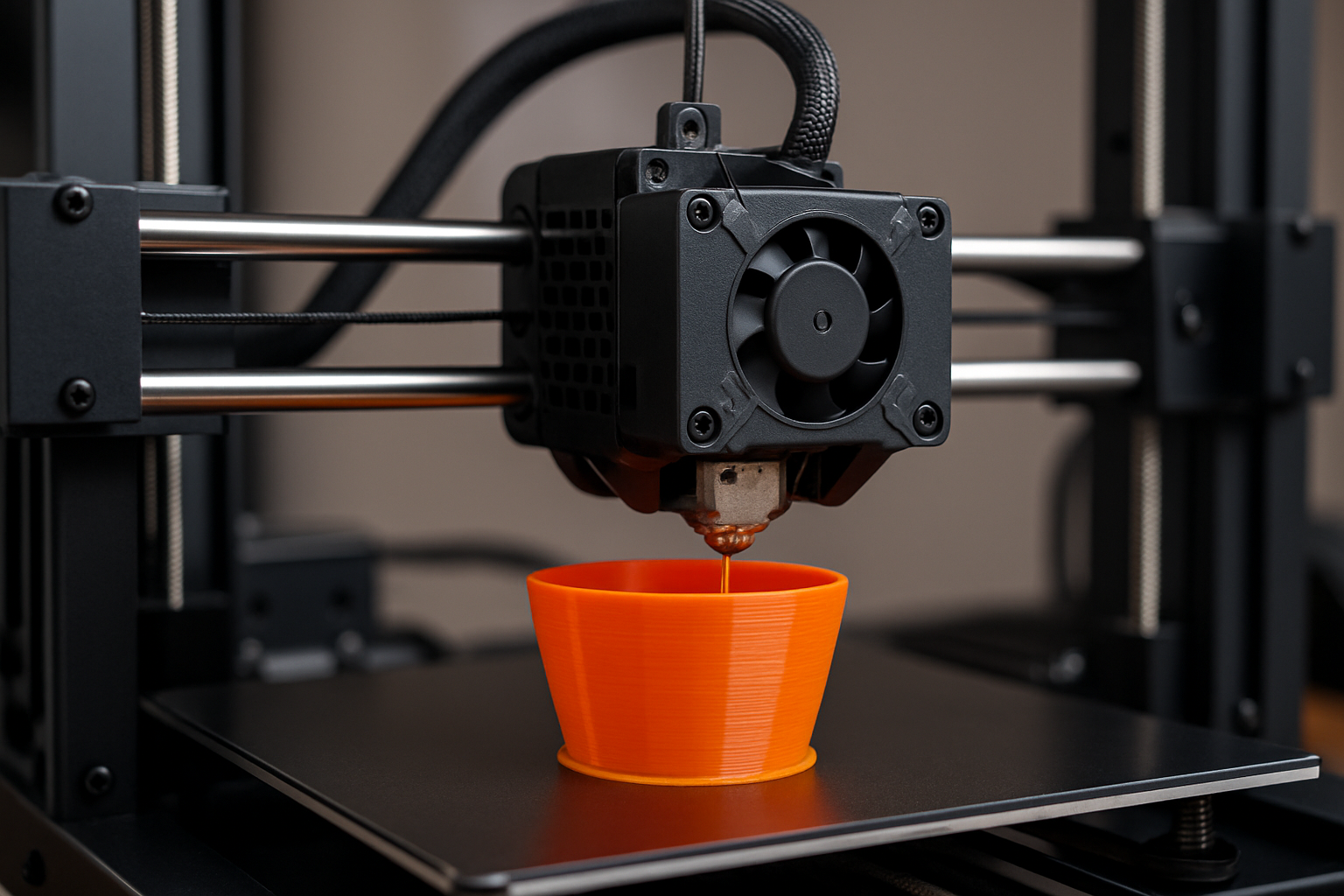
From an engineering perspective, FDM is a material extrusion process. A thermoplastic filament is heated to its glass transition temperature and selectively deposited layer by layer. However, in 2025 and 2026, we are seeing the rise of AI-driven path optimization, where machine learning algorithms adjust the print head in real-time to eliminate defects like “spaghetti” or nozzle blobs before they ruin a print.
If you are just starting this journey, my guide on 3D printing for absolute beginners is the perfect place to get your bearings on the basic hardware.
Decoding the Tech: The Pastry Chef Analogy
Imagine a 3D printer as an ultra-skilled pastry chef. Instead of using a CNC mill to carve a cake out of a giant block of frozen sponge, our chef uses a piping bag.
FDM is exactly like the chef squeezing frosting out of a bag to create a fancy cake. But now, thanks to “AI,” our chef has a digital brain that watches the frosting as it lands. If a blob is about to form, the chef adjusts their hand instantly to keep the lines perfect. This allows for crazy designs that would be impossible with a regular baking mold.
2. Materials Science: From Bioplastics to “Living” Tissues
Engineers choose materials based on mechanical requirements—tensile strength, ductility, and heat resistance.
- Polylactic Acid (PLA): The standard for dimensional accuracy and biodegradable convenience.
- PETG: The durable middle ground that offers the “goldilocks” balance of strength and ease.
- Biocompatible Materials: In the medical field, we are now printing scaffolds that integrate with human biology, facilitating tissue engineering and bone regeneration.
For those who demand engineering-grade consistency, COEX remains my top recommendation for filament that never lets you down. Exclusive Offer: Use coupon code 3DPRINTINGBYKEVIN at COEX 3D for 15% off your order of high-performance American-made filament.
Decoding the Tech: The Frosting Menu
Think of these materials as different types of frosting. PLA is like Royal Icing—it dries hard and holds sharp corners. PETG is like a sturdy Buttercream. But the new Medical 3D Printing? That is like a chef using a special “living” frosting that actually helps the cake grow and repair itself. It is a paradigm shift in how we treat the human body, moving toward curing diseases like Parkinson’s and diabetes with organs printed from a patient’s own cells.
3. Precision, Tolerance, and the Speed Revolution
In 2026, the conversation has shifted from “Can it print?” to “How fast and accurate is it?” Engineers now focus on Z-axis resolution and XY-plane precision at speeds exceeding 500mm/s. Achieving tight tolerances at these high speeds is the new frontier.
However, speed can be a double-edged sword. I have explored what happens when you slow your 3D printer down, and the results might surprise you. Precision often requires a delicate balance, which you can master with the calibration trick that makes any 3D printer perform better.
Decoding the Tech: The Secret to a Perfect Cake
Precision is making sure your cake layers are perfectly level. If the chef moves too fast, the frosting might smear. It is about adjusting how hard you squeeze the bag and how fast you move your hand. That is what engineers do with 3D printers to ensure parts fit together like a glove.
4. Revolutionary Applications: Beyond the Desktop
The future of 3D printing is reshaping entire industries:
- Sustainable Construction: We are now 3D printing entire neighborhoods using eco-friendly concrete alternatives, reducing carbon emissions and material waste significantly while providing affordable housing solutions.
- Personalized Healthcare: From custom 3D-printed insoles to patient-specific dental appliances and implants, the “one size fits all” era of medicine is over.
- Education: Students are pushing the boundaries of 3D printing by bringing complex STEM concepts to life tangibly, nurturing the next generation of innovators.
To join this revolution, you need the right hardware. I recommend Creality for their reliable, high-speed ecosystems. For those needing to bridge the physical and digital worlds, 3DMakerpro offers incredible 3D scanning technology to digitize real-world objects in seconds.
Once you have your gear, acquiring the skills to design 3D objects using software is your next mission. This is the core of how to 3D print like a pro from model to masterpiece.
5. The Best 3D Printers of 2025-2026: Speed & Smarts
Finding the most affordable 3D printer that doesn’t sacrifice quality is easier than ever. Here are the current market leaders:
- Bambu Lab P2S: The new gold standard for mid-sized CoreXY speed. It features AI error detection and an AMS 2 Pro system for seamless multi-color printing.
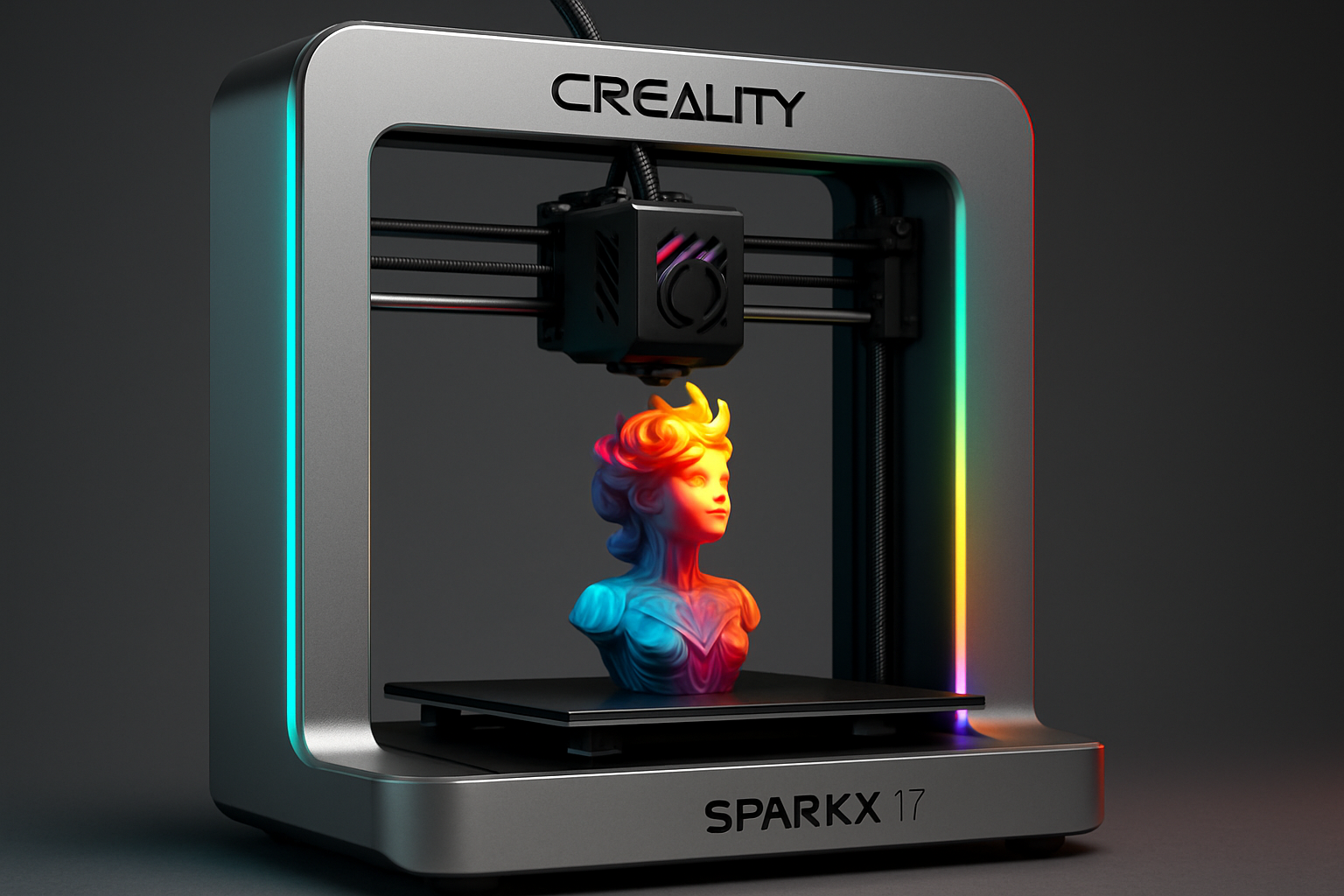
- Creality SparkX i7: An incredible beginner-friendly machine with high-speed “smarts,” a sleek UI, and a “Photo-to-3D” feature that removes modeling barriers.
- Elegoo Centauri Carbon 2: A fully enclosed speedster that offers professional performance and 45dB quiet operation, perfect for home offices.
- Anycubic Kobra X: The king of entry-level multicolor printing, designed to put four-color capability into the box at a budget-friendly price point.
Don’t forget that even the best printer needs maintenance. Check out the 15 tools every 3D printer owner should have to keep your workshop running like a pro.
FAQ: Navigating 3D Printing
Is 3D printing still just for plastic? No. While plastic is common for hobbyists, industrial printers now use metal, ceramics, concrete, and even living cells (bioprinting).
How fast can modern 3D printers go? Most modern consumer printers now reach speeds of 500mm/s to 600mm/s, which is 5-10 times faster than printers from just a few years ago.
Can I print functional tools? Absolutely. With high-strength filaments from COEX, you can print functional tools, replacement parts, and even complex mechanical assemblies.
Conclusion,
Whether you are fascinated by the tensile strength of a medical scaffold or simply amazed that a machine can “bake” a custom prosthetic, 3D printing is an astronomical leap in human capability. We are moving toward a future where bold ideas are turned into physical reality—one layer at a time.