
Replacement parts • Material selection • Practical repairs
The replacement clip snaps into place. The screw holes line up. For a moment, the repair feels finished.
But fitting on the workbench is only the beginning. The part still has to live beside a warm appliance, flex every time a lid opens, or hold its shape through a summer outdoors. Those conditions belong in the material decision before you press Print.
The best filament for replacement parts depends on what the part must survive. Material, geometry, layer bonding, orientation, and installation all matter. A more expensive spool cannot rescue every weak design.
Choose by the job the part has to do
Use this table to narrow your options. It identifies candidates, not approved substitutions for an original component. On a phone, swipe the table sideways.
| Part or condition | Materials to evaluate | Question before printing |
|---|---|---|
| Cool indoor cover, end cap, or fit model | PLA or PETG | Will it face heat, repeated bending, or sustained load? |
| Light-duty holder or splash-exposed cover | PETG | What cleaners, loads, and temperatures will it encounter? |
| Outdoor cover or lightly loaded mount | ASA; suitable PETG grades for some uses | How much sun, heat, weather, and sustained force? |
| Warm indoor component | ABS or ASA; other engineering grades if required | What is the measured peak temperature under load? |
| Gear, slider, or repeatedly moving component | Application-appropriate nylon | What wear, moisture, fit, and lubrication conditions apply? |
| Flexible foot, bumper, or protective sleeve | TPU | What hardness, compression, and recovery are needed? |
| Fuel, pressure, safety-critical loads, or uncertain chemicals | No automatic filament recommendation | Is an original part or qualified engineering review required? |
Compare these starting points with the manufacturer’s filament material guide and the technical data for the exact product you plan to use.
Read the failure before you buy the spool
A snapped tab, a sagging mount, and a worn hole tell different stories. Photograph the original in place, save the fragments, and examine its mating surfaces. A clean break is a clue, not proof that the plastic was too brittle: an overly tight fit or excessive force may have caused it.
A sunny outdoor mount must satisfy weather and load requirements together. Choosing a UV-resistant filament does not establish that the mount can carry its load. If you cannot describe the working conditions, that is the next task—not buying a stronger-sounding material.
For the broader decision, see how discontinued replacement projects are evaluated.
PLA: useful when the job stays within its limits
PLA can be a sensible choice for a lightly handled indoor cover, an initial dimensional model, or a simple template. Easy printing and useful stiffness have value.
Ordinary PLA has limited heat tolerance; deformation becomes a concern around 60°C, depending on the grade and loading. That is not a safe operating-temperature guarantee. A loaded component can become unsuitable before a simple temperature comparison suggests trouble. See the manufacturer’s PLA guidance.
A PLA trial can answer whether a cover clears a neighboring screw. It cannot prove that the final ASA version will fit identically. Recheck critical dimensions in the final material and process.
PETG: a practical candidate for everyday functional parts
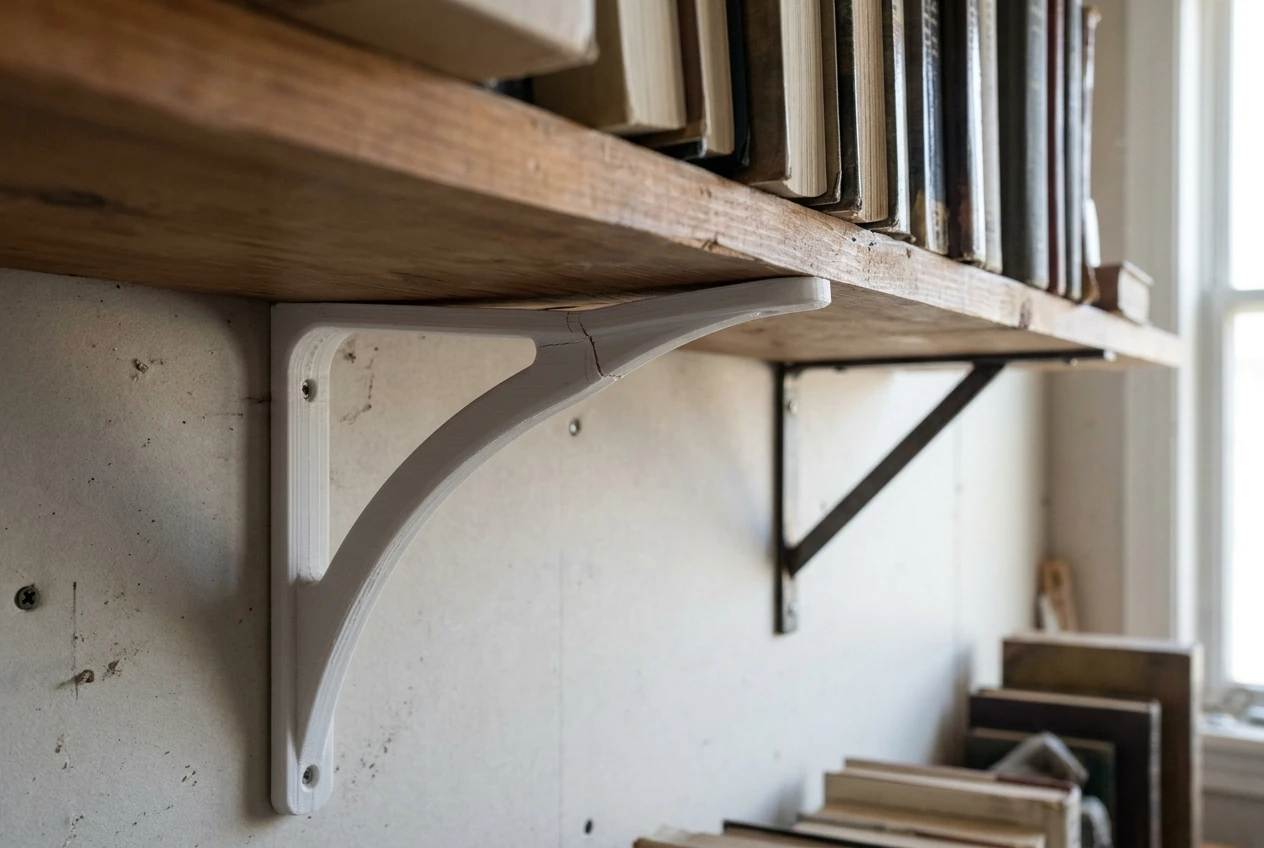
PETG often makes sense to evaluate for covers, holders, and lightly loaded clips where toughness and moisture resistance are useful. It can also suit outdoor applications; calling every PETG outdoor repair temporary is too broad. Prolonged exposure, formulation, temperature, and mechanical demands still matter.
Think about a replacement cover on a garden accessory. The questions are whether it retains its fit and tolerates its surroundings—not whether PETG wins a universal strength contest. Prusa’s PETG guidance includes indoor and outdoor uses.
Use the printer and plate manufacturer’s adhesion instructions. PETG can bond aggressively to some surfaces; a separator may be needed on one plate and unnecessary on another.
ASA and ABS: consider the environment as well as the printer
ASA is worth evaluating when sunlight and weather are central requirements. ABS can be useful for suitable indoor components needing more heat tolerance than ordinary PLA. Neither label approves a part for a hot appliance, vehicle, or heavy load.
An outdoor equipment cover is a different problem from a bracket supporting something overhead. Establish the conditions before choosing either material. For ASA’s weather resistance, warping behavior, and printing precautions, consult the manufacturer’s ASA guide.
These materials generally benefit from controlled printing conditions. Follow ventilation and emissions guidance as well as enclosure recommendations; enclosing a printer does not by itself establish adequate exposure control.
Nylon: investigate the grade, not just the name
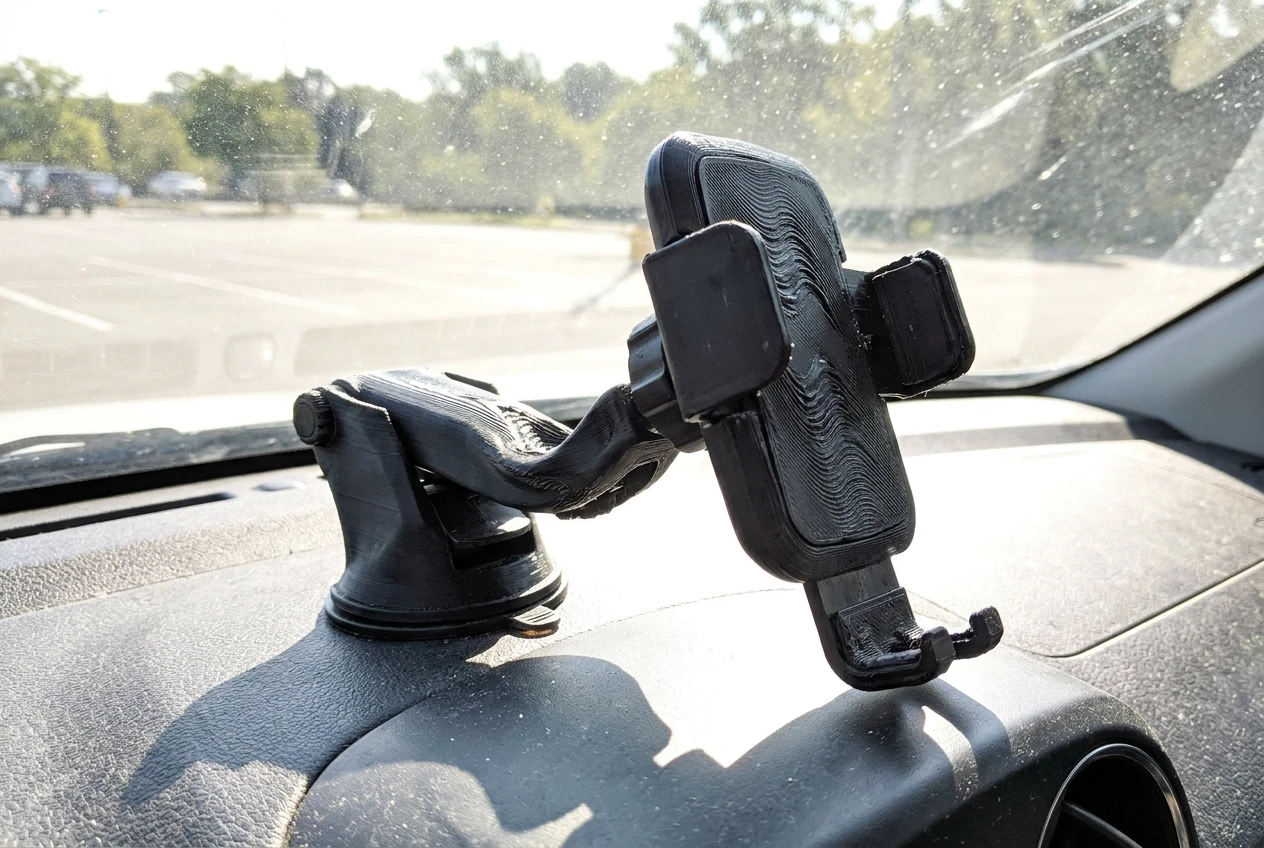
Nylon may be a candidate for gears, sliding surfaces, and parts experiencing repeated movement. But PA6, PA12, PA11, blends, and reinforced products do not behave identically.
Moisture can affect printing and the finished dimensions. Drying, storage, conditioning, and clearances therefore belong in the plan. An enclosure is helpful for many grades, while some filled formulations have different requirements. Follow the specific product’s instructions rather than a universal nylon preset. The polyamide guide explains these practical challenges.
For a small gear, record the shaft fit, mating gear, operating speed, load, and lubricant. Those details are more useful than simply requesting the strongest nylon available.
TPU: start with how the part should compress or bend
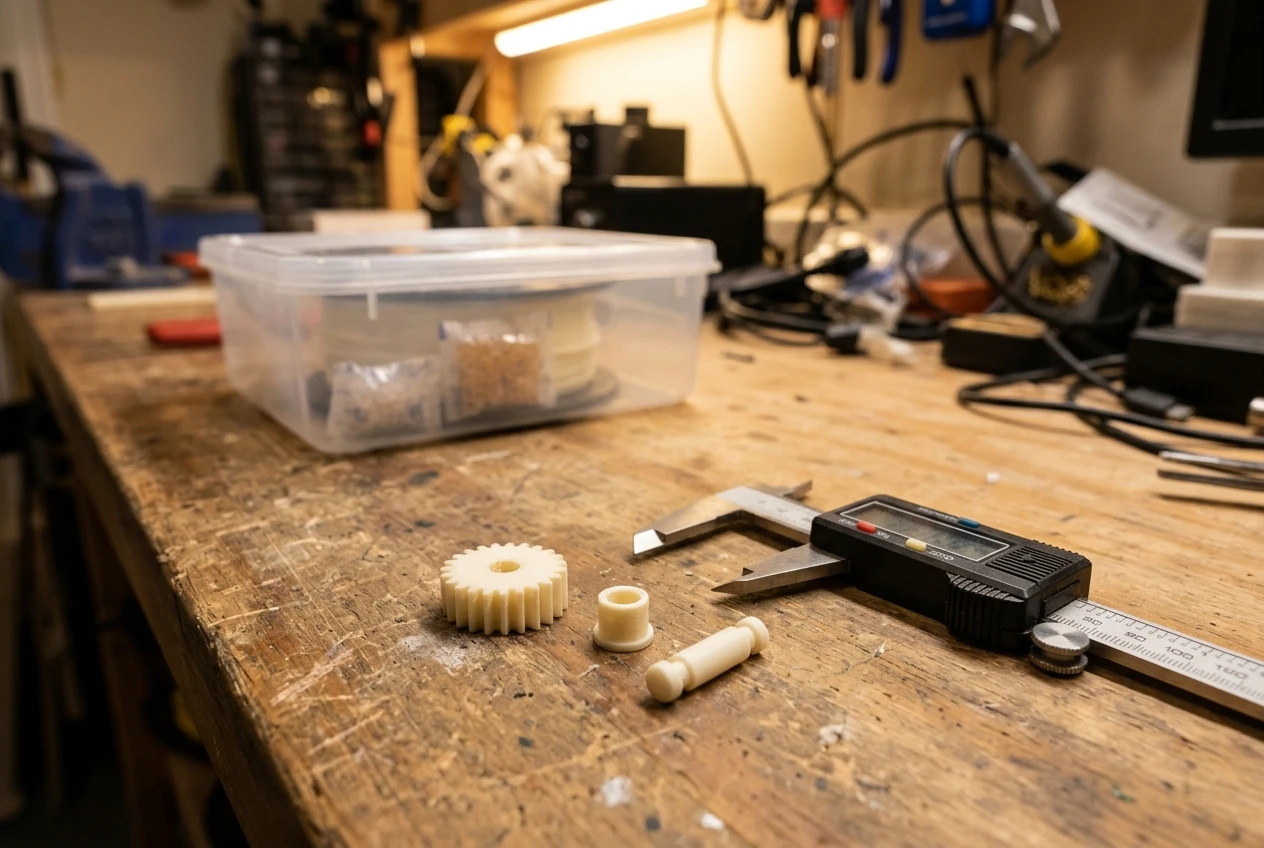
A replacement foot should support its load without compressing too far. A bumper should cushion contact. A protective sleeve needs enough flexibility to install without becoming loose. TPU can be a candidate for each, but the hardness and geometry must suit the task.
Check Shore hardness, printer compatibility, and the filament profile. Softer materials can be harder to feed reliably. See the flexible-material printing guide.
Keep fluid seals out of a casual material-selection table. A flexible print is not automatically leak-tight, chemically compatible, or suitable for pressure. Use application-rated components where a leak could cause harm or damage.
Three repairs that lead to different decisions
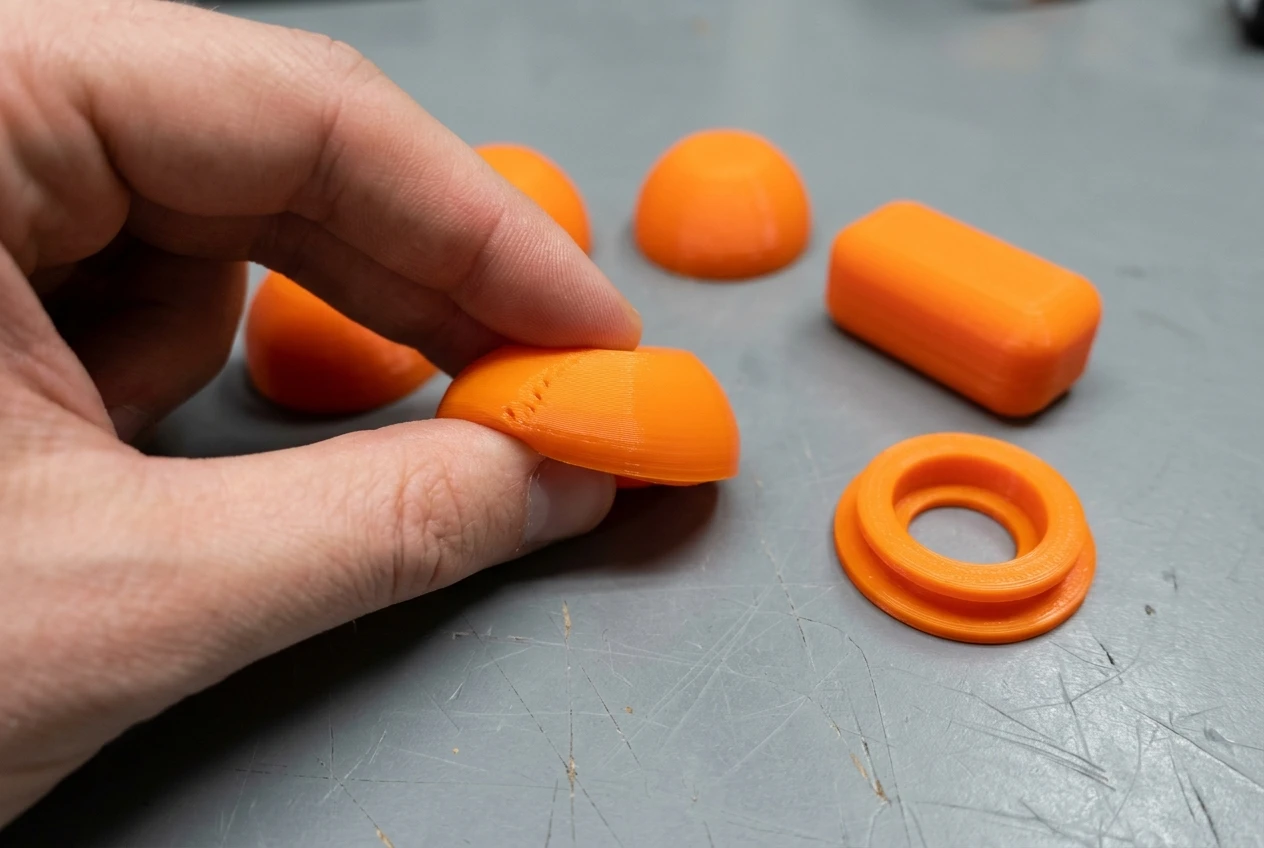
These are illustrative planning examples, not customer case studies or tested material approvals.
A better filament cannot fix every weak spot
Inspect thin roots, sharp corners, screw holes, and the direction of force before changing materials. A clip that must spread too far may need different geometry. A screw boss that splits during assembly may need a revised hole, more surrounding material, or a different fastening arrangement.
For orientation, ask whether the load tends to pull the layer interfaces apart. Avoid that arrangement where practical, and inspect the sliced toolpaths. More walls can help some designs, but neither wall count nor infill percentage is a universal strength prescription.
Use the guides to cracking around screws and parts breaking at layer lines when the failure points to those issues.
Plan the replacement with the P.R.I.N.T. Method™
Use this mini planner before requesting a quote or buying filament. Your entries stay on this page and are not submitted or saved; copy your notes before leaving.
Before you buy: check the product and the process
Confirm nozzle and bed limits, enclosure requirements, drying instructions, and build-surface compatibility. If the chosen filament contains abrasive fillers, check nozzle suitability too. A machine that reaches a listed temperature is not automatically ready for the entire workflow.
For chemical exposure, record the actual substance, concentration, temperature, and contact duration. “Garage chemicals” is not a specification. Where compatibility data is missing, seek manufacturer advice or use an appropriate original component.
For food-contact parts, consider the complete process, additives, cleanability, and intended use. A filament label alone is insufficient; the food-contact printing guidance describes some of the complications.
Affiliate disclosure: The following COEX link is an affiliate link. If you purchase through it, I may earn a commission at no additional cost to you.
Once you have defined the requirements, you can browse COEX filament options. Check the exact product documentation before ordering. A brand recommendation does not establish suitability for your particular repair.
Four-question knowledge check
Choose an answer, then open the explanation.
1. An outdoor bracket also carries a constant load.
What should guide the choice?
A. UV resistance alone · B. Weather and load together · C. Spool color
Answer: B. The material and design must address the combined conditions. Weather resistance does not establish load capacity.
2. A PLA trial fits. Is the final nylon part guaranteed to fit?
A. Yes · B. Only with more infill · C. No
Answer: C. Material and process changes can affect dimensions. Check the critical fit again in the final material.
3. A part splits beside a screw. What is the best next step?
A. Review the joint and printing process ·
B. Buy the most expensive filament ·
C. Set infill to 100%
Answer: A. Examine clearance, surrounding material, installation force, layer direction, and print quality before choosing a remedy.
4. You need a replacement flexible foot.
What matters beyond “TPU”?
A. Only color ·
B. Hardness, geometry, load, and compression ·
C. Only nozzle temperature
Answer: B. The finished foot must behave appropriately under its actual load.
Frequently asked questions
What is the best filament for replacement parts?
There is no universal winner. Define the environment, forces, fit, and failure consequences, then evaluate a specific material and printing process. The comparison table provides a starting shortlist.
Should I copy the original plastic?
A material marking can be useful evidence, but the original may have been molded, reinforced, or manufactured differently. Matching a polymer name does not reproduce the original part’s properties.
Can I use PETG outside?
Yes, for suitable applications. Assess the exact formulation, exposure, temperature, and load. ASA is another candidate when prolonged UV exposure is a central requirement.
Can I use PLA for the first test?
Often, for an initial geometry or assembly check. Recheck critical dimensions in the final material, and keep dimensional testing separate from functional evaluation.
When should I stop and request help?
When operating conditions are uncertain, the part keeps failing, or failure could cause injury or serious damage. Fuel, pressure, high voltage, braking, personal support, and regulated uses require more than a casual filament recommendation.
Have the broken part, but not the material answer?
Send photos of the part and its assembly, dimensions, quantity, intended use, and any files you have. Include heat, movement, loads, and chemicals—even if some details are still unknown.
I can review the requirements and help identify a practical next step. 3D Printing by Kevin is based in Independence, Kentucky, serving Northern Kentucky and Greater Cincinnati, with suitable remote projects considered.
Request a replacement-part reviewProjects are evaluated for feasibility, permissions, safety, budget, and scheduling before acceptance.
Learning to make your own parts? Start with the free beginner guide.
What are you trying to replace? Share the part, where it lives, and what happened to the original in the comments. Those details make the material discussion far more useful than asking which filament is strongest.
