
If you want a load-bearing 3D printed part to last, don’t start with a brand or a “strongest filament” list. Start with three questions: Will it see heat? Will it get hit (impact)? And which direction will the force pull on your layers?
This guide uses what independent stress tests and manufacturer data repeatedly show: tensile strength on a datasheet does not equal “strong part” once layer adhesion, print orientation, and temperature enter the room. We’ll turn the data into a simple buying decision you can trust.
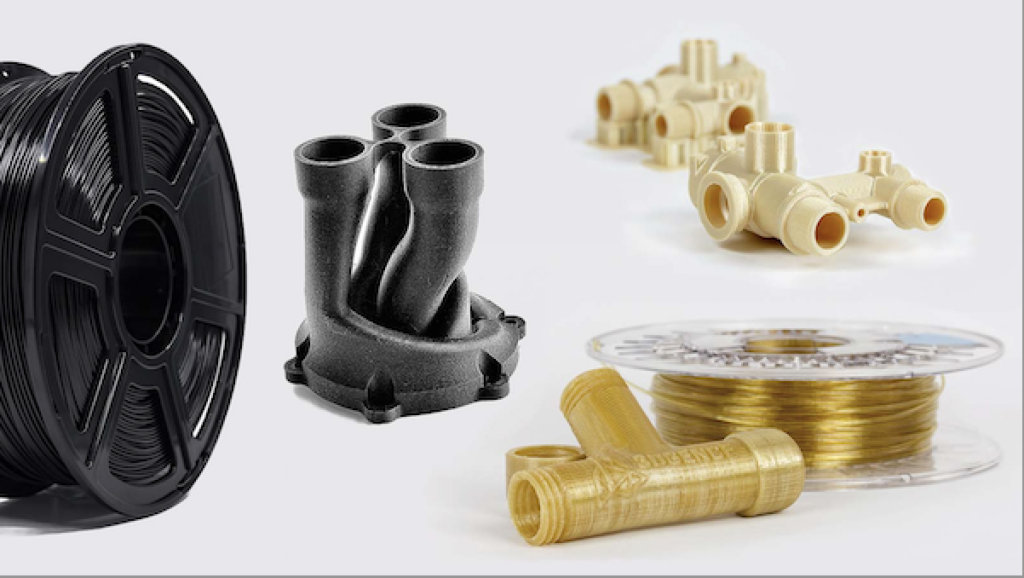
- Choose PETG when you need toughness and easier printing for functional parts.
- Choose ASA/ABS when heat and long-term stability matter.
- Choose Nylon (PA) when impact resistance and real-world abuse are the priority.
- Choose PC when you need high heat performance and strength (and your printer can handle it).
- Use CF blends for stiffness and dimensional stability, not as a magic “stronger” button.
The load-bearing reality most people miss
Load-bearing failure usually happens in one of four ways. Once you identify which one you’re fighting, filament selection becomes straightforward.
| Failure mode | What it looks like | What fixes it fastest |
|---|---|---|
| Heat creep / softening | Part bends or “creeps” under load | ASA/ABS, PC, Nylon; thicker walls; avoid hot environments |
| Brittle snap | Clean break with little warning | PETG, Nylon, ASA; add fillets; avoid sharp corners |
| Layer delamination (Z weakness) | Part splits along layer lines | Change orientation; raise temp; lower fan; choose better layer-bonding materials |
| Fatigue (repeated stress) | Cracks form over time | Nylon, PETG; add ribs; increase perimeters; reduce stress concentration |
Key takeaway: If the force is trying to peel layers apart, the “strongest” filament on paper can still fail early. Orientation and bonding win first. Then material choice matters.
If you want to lock in reliable extrusion before you even start strength tuning, use my calibration workflow here: Beginner’s Guide to 3D Printer Calibration and this faster method for finding your hotend’s real limit: The 3D-Printing Calibration Trick That Cuts Failures.
What “stress-test data” actually tells you (and what it doesn’t)
You’ll see two types of “data” online:
- Datasheet numbers (ASTM tensile strength, flexural strength, HDT). Good for comparing a material family, but not always comparable across brands.
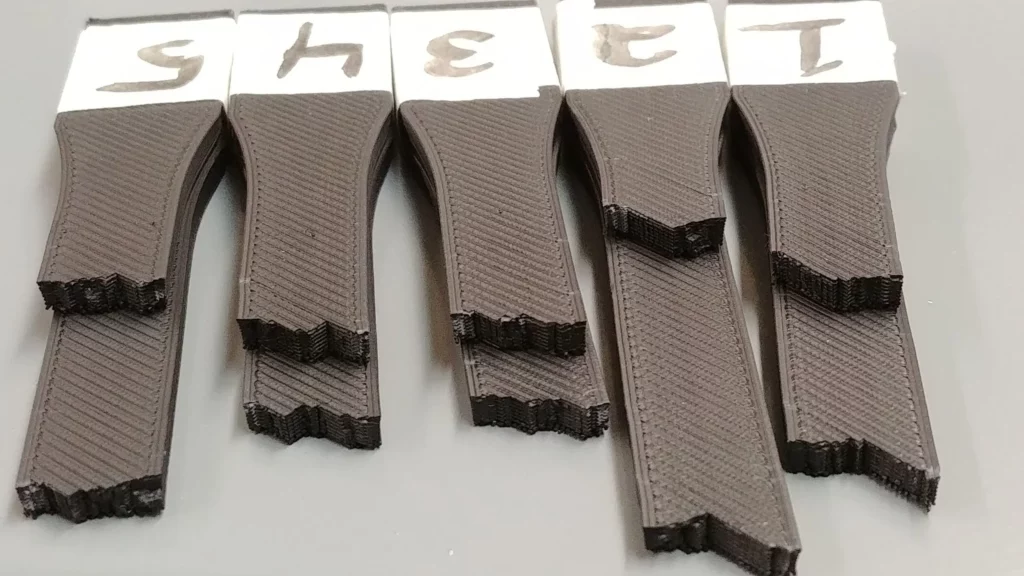
- Printed-part tests (pull tests, impact tests, creep tests). These reveal the truth about layer adhesion, print settings, and orientation.
Independent testing regularly shows that:
- PLA can test “strong” in simple tensile pulls, but it tends to be more brittle and can deform earlier with heat.
- PETG often survives real-world abuse better because it’s tougher and less brittle.
- ASA/ABS trade some tensile strength for better heat resistance and better performance outdoors (ASA especially).
- Nylon is a durability monster when printed correctly, but moisture control is non-negotiable.
- Carbon fiber blends are usually stiffer and more dimensionally stable, but they are not automatically “stronger” in every direction.
For a clear example of why “the same material” can vary, CNC Kitchen documents measurable strength differences even between PLA colors and formulations. That matters when you’re building a part that can’t fail.
Helpful sources (for readers who want the raw testing):
CNC Kitchen: Comparing PLA, PETG & ASA
CNC Kitchen: PLA color vs strength (why batches vary)
Ultimaker: PETG vs PLA vs ABS strength tradeoffs
Fast picker: the right filament for your load case
If you only read one section, read this. Match the part to the environment and how it fails.
| Your real need | Best filament family | Why it wins | Watch out for |
|---|---|---|---|
| Everyday functional parts (brackets, mounts) indoors | PETG | Tougher than PLA, forgiving, good durability | Can be stringy; needs good cooling balance |
| Hot car, near motors, warm enclosures | ASA / ABS | Better heat resistance and stability | Warping; needs good bed adhesion and airflow control |
| Impact, drops, vibration, repeated abuse | Nylon (PA) | Excellent toughness and fatigue resistance | Moisture; drying and storage matter |
| High heat + strength when you can tune for it | Polycarbonate (PC) | High performance when printed correctly | Needs higher temps; enclosure strongly recommended |
| Stiff parts that must not flex (fixtures, jigs) | CF Nylon / CF PETG | High stiffness and dimensional stability | Abrasive; needs hardened nozzle; can be less impact-tough |
If your part is outdoors or sees sun, ASA is usually a smarter “ABS-like” choice because it’s designed for UV exposure. For ABS success tactics (even if you don’t have a full enclosure), use: The Professional Guide to Zero-Warp ABS Printing.
If you’re already printing PETG, this walkthrough will help you tighten consistency before you chase “stronger” materials: 3D Printing with PETG Filament.

Use code 3DPRINTINGBYKEVIN at checkout.
Buyer checklist: what to look for in a “strong filament” (before you buy)
Here’s the truth: load-bearing success is usually decided at checkout. Not on the printer.
1) Heat resistance (HDT) matters more than tensile strength for many parts
If your part will sit under load in a warm space, it can slowly deform even if it never “snaps.” Look for higher heat deflection temperature (HDT) and real-world testing at elevated temps. When heat is involved, PLA is often the first material to disappoint.
2) Impact resistance is the hidden “strength” most people actually need
Brackets rarely fail in slow-motion tension tests. They fail when something bumps them, a tool hits them, or a vibration cycle repeats 5,000 times. PETG and Nylon usually outperform brittle materials in those messy real-world moments.
3) Layer adhesion beats marketing every time
If your part will be pulled across layers (Z direction), buy a filament known for strong interlayer bonding and print it with the right temperature and cooling strategy. If you’re troubleshooting weak layers, start here: Troubleshooting and Tips for 3D Printing.
4) Consistency matters: diameter tolerance and moisture control
For functional parts, consistency is a feature. Better tolerance reduces under-extrusion swings. And for Nylon especially, dry filament is not optional. If you want a broader filament shopping guide (including storage), this is a good companion read: Filament Buying Guide (Multicolor, but the storage advice applies).
Strength tuning that actually moves the needle
Before you spend more on filament, do these four things. They often deliver bigger gains than switching materials.
1) Change part orientation first
Whenever possible, orient the part so the main load is carried within layers, not between layers. If the force is peeling layers apart, most materials will disappoint.
2) Add perimeters, not just infill
For load-bearing parts, extra walls usually outperform extra infill. A practical starting point: 4–6 perimeters and moderate infill. Then test.
3) Use fillets and avoid sharp inside corners
Stress concentrates at sharp corners. Small fillets can dramatically reduce crack initiation. This is one of the simplest “engineering upgrades” you can make.
4) Raise temperature carefully to improve bonding
Within the safe range for your filament, slightly higher nozzle temps often improve layer adhesion. Pair that with controlled cooling (especially for ABS/ASA) and you get stronger parts with fewer surprises.
If you’re pushing speeds, remember: strength can drop when the hotend can’t keep up. This overview helps you balance throughput and quality: High-Speed 3D Printing Compared.
Recommended “load-bearing upgrade kit”
To print stronger parts, you usually need one or two practical upgrades. These are the purchases that make advanced materials behave.
- Hardened nozzle for abrasive filaments (carbon fiber, glass fiber).
- Enclosure or draft control for ABS/ASA and many PC/Nylon jobs.
- Dry storage (bags, desiccant, or a dryer) for Nylon and other hygroscopic materials.
CTA: Printers that make strong materials easier (Creality)
If you want to print tougher materials with fewer headaches, the printer matters. Enclosed machines and higher-temp capability make ASA, Nylon, and PC far more predictable.
Disclosure: This link may be an affiliate link. If you buy through it, I may earn a commission at no extra cost to you.
Engineering-grade filament that’s built for functional parts (COEX)
If your parts need stiffness and dimensional stability, carbon fiber nylon is a serious upgrade (as long as you print it dry and use a hardened nozzle).
Quick note: COEX also documents why abrasive filaments require hardened nozzles. If you’re new to CF materials, read this first: COEX Filament Parameters.
Disclosure: This link may be an affiliate link. If you buy through it, I may earn a commission at no extra cost to you.
Digitize a replacement part before you print it (3DMakerpro)
If your “load-bearing part” is a replacement piece, scanning the original can save hours of measuring and guessing.
Disclosure: This link may be an affiliate link. If you buy through it, I may earn a commission at no extra cost to you.
Parts, accessories, and maker supplies (HONG KONG CHAORONG CO., LIMITED)
Need practical upgrades like nozzles, build surfaces, and print accessories that support stronger parts? This is a quick place to check current options.
Disclosure: This link may be an affiliate link. If you buy through it, I may earn a commission at no extra cost to you.
FAQ: Load-bearing filament choices
What is the best filament for load-bearing parts?
The best filament depends on the failure mode. For many indoor functional parts, PETG is the best balance of durability and printability. For heat, ASA/ABS often wins. For impact and long-term abuse, Nylon is hard to beat when printed dry.
Is PLA strong enough for load-bearing parts?
Sometimes. PLA can test high in tensile pulls, but it can be brittle and it can deform under heat over time. If the part lives in a warm area or takes impacts, PETG, ASA, or Nylon is usually the safer pick.
Does 100% infill make a part stronger?
Not always. For many load-bearing parts, adding perimeters (walls) provides a bigger strength boost than pushing infill to 100%. Use more walls first, then increase infill only if testing shows you need it.
Are carbon fiber filaments always stronger?
No. Carbon fiber blends are typically stiffer and more dimensionally stable, which is excellent for jigs and fixtures. But they are abrasive and can be less impact-tough than you expect. Use them when stiffness and stability matter most.
How do I make layers bond stronger?
Increase nozzle temperature within the filament’s safe range, reduce part cooling (especially for ABS/ASA), slow down outer walls, and keep filament dry. Also, orient the part so loads run within layers whenever possible.
Next steps: test like a pro (without buying a lab)
If the part matters, don’t guess. Print two or three small test coupons in your top materials and try to break them in the same direction your real part will be stressed. That single habit will save more time and money than any “top 10 strongest filaments” list.
And if you want a full workflow from setup to consistent results, start here: How to Get Started with Desktop 3D Printing (Beginner’s Guide) and Flawless 3D Printing Made Simple.
Affiliate disclosure: Some links in this post may be affiliate links. If you purchase through them, I may earn a commission at no extra cost to you. I only recommend products and tools that make functional printing more reliable.
