
Is Resin Printing Getting Safer in 2026? What’s Changed

Spread the love
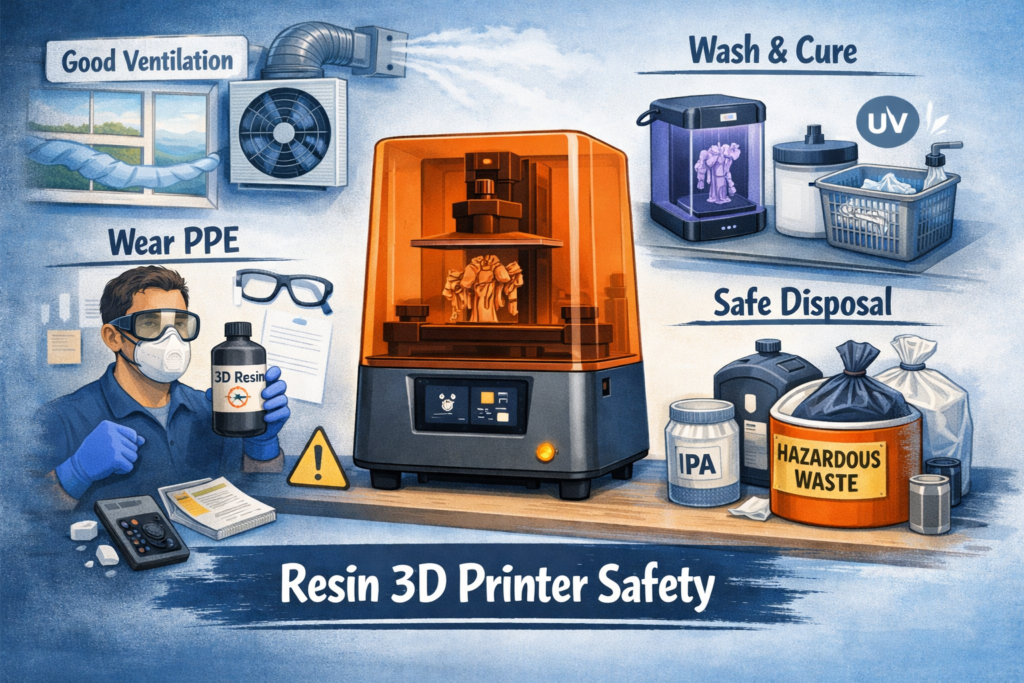
Resin 3d Printer Safety Illustration is Ready — It Shows a Balanced, Educational Depiction of Proper Ventilation, Ppe, Resin Handling, Washing, Curing, and Disposal Practices.
Resin 3D Printing Safety 2026

Is Resin Printing Getting Safer? What’s Changed in 2026

Resin printing is cleaner, smarter, and easier to manage than it used to be. But I have not rushed into it for one simple reason: safety. I am currently remodeling my shop so resin printing can be handled the right way, with the ventilation, workflow, and cleanup space it deserves.

Better printers Cleaner workflows Shop prep matters Still not risk-free

Affiliate disclosure: Some links on 3DPrintingbyKevin.com may be affiliate links. That means I may earn a small commission if you purchase through one of those links, at no additional cost to you. I only place links where they make sense for the reader.

A quick honest note before we start

I do not currently do resin 3D printing in my shop. That is intentional. I have stayed away from it because liquid resin brings a different level of safety concern than normal filament printing. I am comfortable working with FDM printers, materials like PLA, PETG, ASA, and other filament-based projects, but resin requires a more controlled setup.

That does not mean I am against resin printing. In fact, I am in the process of remodeling my shop so I can accommodate resin printing properly. Before I add it to my workflow, I want the space, ventilation, protective equipment, washing area, curing station, and waste-handling process to make sense.

So this article is not written from the angle of “I resin print every day.” It is written from the angle of a practical 3D printing shop owner who sees the value of resin printing, respects the risks, and is preparing to do it correctly instead of casually.

The direct answer: yes, resin printing is getting safer, but it still deserves respect

Resin printing has improved a lot. Printers are more enclosed. Wash-and-cure stations are easier to find. Resin bottles are labeled better. Desktop users are talking more openly about ventilation, gloves, eye protection, and disposal. In that sense, resin printing in 2026 is safer than the messy early days when many hobbyists treated liquid resin like ordinary craft glue.

But the core reality has not changed. Uncured photopolymer resin is still a chemical material that can irritate skin and eyes. Some users can become sensitized after repeated contact. Solvents such as isopropyl alcohol still need careful handling. Resin-contaminated paper towels, gloves, supports, failed prints, and wash liquid still need to be managed responsibly.

So the better question is not, “Is resin printing safe now?” The better question is, “Can resin printing be done more safely at home or in a small shop in 2026?” My answer is yes, but only if the user treats the whole process like a small chemical workstation, not just another desktop gadget.

What improved

Printers, lids, vats, wash stations, curing tools, and beginner awareness.

What helps most

A clean workflow with ventilation, gloves, eye protection, and controlled cleanup.

Why I waited

Resin is not something I want to add until my shop is prepared for it.

Best use case

Fine-detail models, miniatures, display pieces, jewelry masters, and visual prototypes.

Resin Printing Reality Check

Before getting into the details, here is a quick gut check. If you are thinking about buying a resin printer in 2026, these questions matter more than print speed or screen resolution.

  • Do you have a place to print that is away from kids, pets, food, and everyday living space?
  • Can you ventilate the area without simply blowing fumes into another room?
  • Are you willing to wear nitrile gloves and eye protection every time you handle uncured resin?
  • Do you have a plan for dirty alcohol, resin-contaminated towels, failed supports, and leftover resin?
  • Are you buying resin because you truly need fine detail, or would a filament printer be safer and more practical for the part?

If those questions feel annoying, resin printing may not be the best first step. If they feel reasonable, resin can be a powerful tool. That is exactly why I am preparing the shop first instead of simply buying a resin printer and figuring it out later.

Why resin printing feels safer now

Most desktop resin printers today are far more polished than the early machines many hobbyists started with. Lids fit better. Build plates are easier to remove. Wash-and-cure stations reduce some of the old hand-cleaning mess. Many printers now include carbon filters, better vat designs, spill-conscious accessories, and easier slicing workflows.

That matters because resin safety is often won or lost during the small moments. Pouring. Removing the build plate. Scraping prints. Washing parts. Pulling supports. Curing. Cleaning the vat. Throwing away gloves. A better-designed workflow reduces the chances of touching resin, splashing resin, dripping resin across the bench, or leaving sticky tools everywhere.

Official safety guidance still treats 3D printing as something that can create chemical and particle exposure concerns, especially in smaller or poorly ventilated spaces. The NIOSH guide to safer 3D printing is a good resource because it does not treat printing as one simple risk. It looks at the entire process: printing, post-processing, cleaning, materials, ventilation, PPE, and waste.

What changed by 2026 Why it helps What still needs caution
Better enclosed resin printers They reduce casual contact with the vat and help contain odor near the machine. An enclosure is not the same as proper ventilation or safe handling.
More common wash-and-cure stations They make washing and curing more repeatable and less improvised. Dirty wash liquid and uncured residue still need careful disposal.
More “low odor” and specialty resins They may make printing more comfortable in some setups. Low odor does not automatically mean low hazard.
More safety discussion among hobbyists New users are more likely to hear about gloves, ventilation, and SDS sheets. Online advice can be inconsistent, so manufacturer SDS and official safety guidance matter.
Better remote monitoring and workflow tools Less time standing near the machine can reduce unnecessary exposure. You still need to be present for resin handling, removal, cleanup, and failures.

The biggest misconception: low odor does not equal safe

One of the most important changes in resin printing is the rise of low-odor resins. That sounds good, and in some cases it may make the printing area more pleasant. But odor is not a safety meter.

A resin can smell mild and still require gloves. A resin can smell less offensive and still irritate your skin. A resin can be marketed as plant-based, bio-based, eco-style, or water-washable and still require responsible handling before it is fully cured.

Kevin’s practical rule: If I am not comfortable handling it in my current shop setup, I do not bring it into my regular workflow yet. That is the reason I have waited on resin printing. The material deserves a dedicated space, not a casual corner of the shop.

This is also where Safety Data Sheets matter. OSHA’s Hazard Communication guidance is workplace-focused, but the habit applies to serious hobbyists too: know what material you are using, keep the SDS available, and follow the manufacturer’s handling recommendations.

Water-washable resin changed convenience, not responsibility

Water-washable resin can be attractive because it reduces the need for large amounts of isopropyl alcohol. For some users, that feels safer right away. There is some truth there. Less alcohol can mean less flammable liquid sitting around the workspace.

But water-washable does not mean drain-safe. The rinse water can still contain uncured resin. That contaminated water should not be casually poured down a sink unless the resin manufacturer and local rules clearly allow it. In most home setups, the better mindset is simple: contaminated liquid is contaminated liquid until it is handled properly.

The EPA’s household hazardous waste guidance is a useful reminder that improper disposal can create problems beyond your workbench. With resin printing, that means thinking through the whole chain: liquid resin, dirty rinse water, alcohol, supports, gloves, paper towels, and failed prints.

The safer mindset: If resin touched it before curing, treat it as part of the resin cleanup process. That includes rinse water, alcohol, gloves, paper towels, supports, failed prints, tools, and the surface under the printer.

Resin is not just a printing material. It is a workflow.

Filament printing has its own safety concerns, especially when you get into higher-temperature materials. But resin printing asks more from the user because the part is not finished when the print ends. You still have a wet object covered in uncured resin. You still need to remove it from the plate. You still need to wash it. You still need to cure it. You still need to clean up everything that touched it.

That is why I have not treated resin printing like a simple add-on to my current shop. It is not just another machine. It is a workflow that needs its own space, habits, tools, and cleanup process.

Better Cleaner stations

Wash-and-cure machines help keep post-processing in one area instead of spreading resin across the whole bench.

Still important Ventilation

A covered printer helps, but the room still matters. Small rooms, closets, and shared living spaces are poor choices.

Do not skip Skin and eye protection

Gloves and eye protection are not optional when pouring resin, removing parts, cleaning vats, or handling uncured prints.

What I am looking for before adding resin printing

I am not shopping for a resin setup based on resolution alone. Yes, 8K, 12K, and high-resolution screens sound impressive. They can produce beautiful detail. But for my shop, the better resin setup is the one that helps control the mess and manage the safety process.

Before I bring resin printing into regular use, I want the full station to make sense. That means a stable enclosure, a dedicated work surface, a safe place for the wash-and-cure station, easy vat handling, drip control, good ventilation planning, labeled containers, PPE storage, and a waste-handling process that does not feel improvised.

If you are comparing resin printers, wash-and-cure stations, or beginner-friendly machines, you can browse current Creality options through my Creality affiliate link. My advice is to compare safety workflow features just as seriously as print size and screen resolution.

Tools and materials worth comparing before you choose resin

Not every project needs resin. Sometimes the better investment is the right FDM printer, the right filament, or the right scanning tool before a part ever reaches the printer. These are the kinds of tools I would compare depending on the job.

Creality printers and resin options

Useful if you are comparing desktop resin printers, FDM printers, scanners, or wash-and-cure style accessories.

Shop Creality options

3DMakerpro scanning tools

Helpful for reverse engineering, capturing object shapes, and creating digital references before printing or modeling.

Browse 3DMakerpro scanners

COEX 3D filament

A strong choice when filament printing is the safer or more practical route for functional parts, brackets, and shop projects.

Visit COEX 3D

Coupon code: 3DPRINTINGBYKEVIN for 15% off.

When resin printing makes sense

Resin printing shines when detail matters. Miniatures, display models, dental-style models, jewelry masters, character parts, small prototypes with fine surface detail, and visual design pieces are where resin can look amazing.

That is one reason I am interested in adding it eventually. There are projects where a filament printer can make the shape, but resin can produce the surface detail. For visual prototypes, small display models, and fine-detail parts, resin can offer an advantage.

But I would not choose resin automatically for every job. For brackets, outdoor parts, workshop tools, replacement clips, functional mounts, and parts that need toughness, I usually look at filament materials first. PETG, ASA, ABS, nylon, and carbon-fiber blends may be better choices depending on the job. Resin can be brittle unless you choose a specific tough or engineering resin, and even then, the handling and curing process matters.

Practical takeaway: Resin is excellent for detail. Filament is often better for durable everyday parts. The safest choice is sometimes choosing the right process before the print even starts.

When resin printing may not be the best fit

I would be careful recommending resin printing for a bedroom, kitchen, shared living space, classroom without a real safety plan, or any area where children and pets can reach the machine. I would also avoid resin for casual kid projects unless an experienced adult controls the entire resin workflow.

Resin is also not my first choice for food-contact items, pet bowls, drinkware, cutting boards, or anything that will be chewed, sucked on, or used around food. Even when a resin is marketed for a specialized application, the exact resin, printer, curing cycle, and manufacturer instructions matter.

For beginners who mainly want useful household prints, I still think a filament printer is usually the better first machine. A well-tuned FDM printer can make tool holders, organizers, brackets, toys, jigs, fixtures, and replacement parts without introducing liquid resin into the house. If the project needs strength and everyday usefulness, I would rather start with a reliable FDM setup and a quality material source like COEX 3D filament before jumping into resin.

The resin safety setup I want before I start

A safer resin setup does not need to look like an industrial lab, but it should be more organized than a random desk in the corner. The goal is to create a predictable station where resin enters, prints, gets washed, gets cured, and gets cleaned up without spreading around the room.

A sensible 2026 resin workstation includes:

  • A dedicated table or bench that is not used for food, drinks, paperwork, or general shop clutter.
  • A printer placed away from children, pets, HVAC returns, and high-traffic areas.
  • Ventilation that moves contaminated air away from the breathing zone and, when possible, outdoors.
  • Nitrile gloves sized correctly so cleanup does not become clumsy.
  • Chemical splash eye protection for pouring, scraping, washing, and cleaning.
  • Silicone mats or trays under the printer and wash station to catch drips.
  • A covered container for contaminated paper towels, supports, and failed prints before curing or disposal.
  • Clearly labeled bottles for resin, clean alcohol, dirty alcohol, and rinse water.
  • A UV curing station for parts and resin-contaminated solid waste.
  • A cleanup checklist near the station so nothing depends on memory when the job is done.

Ventilation is still the safety upgrade people underestimate

Carbon filters inside a resin printer can help with odor, but I would not treat them as a full safety plan. A better setup starts with location. A garage, utility area, shop space, or dedicated workroom is usually easier to manage than a bedroom or office.

The ANSI/CAN/UL 2904 standard was created around measuring and assessing particle and chemical emissions from 3D printers in non-industrial spaces. That matters because desktop printers are often used in homes, offices, libraries, schools, and small shops where ventilation may not be designed for chemical work.

For resin printing, ventilation should be part of the buying decision. If a person cannot ventilate the printer safely, then the printer may not belong in that space. That is one of the biggest reasons I am remodeling the shop first instead of adding resin printing to an unprepared area.

A common mistake: putting a resin printer in a closet because it “contains the smell.” A closet may hide the odor, but it can also concentrate what you are trying not to breathe. Containment without a plan for exhaust or filtration is not the same as control.

Gloves matter, but they are not magic

Nitrile gloves are one of the simplest safety habits in resin printing. They protect your hands from direct contact with uncured resin and dirty wash liquid. But gloves only work if you use them correctly.

Do not touch your phone with resin gloves. Do not open doors with resin gloves. Do not grab the sink handle with resin gloves. Do not wear them around the house. Once the outside of the glove is contaminated, everything you touch can become part of the resin workflow.

This is where a lot of beginners get sloppy. They wear gloves, then touch the bottle, the scraper, the wash station, the paper towel roll, the doorknob, and their phone. The gloves protected their skin, but they spread resin everywhere else.

Simple habit: stage your tools before resin comes out of the bottle. That way, you are not searching for supplies while wearing contaminated gloves.

Post-processing is where resin safety often falls apart

The print itself may be enclosed, but post-processing brings the part into your hands. That is where many exposures happen. You remove the build plate. You scrape the part. You pull supports. You wash it. You cure it. You clean the vat. You wipe the bench. You handle dirty liquid.

This is why I am planning around a station-based approach. Printer on one side. Drip tray beside it. Wash station next. Cure station next. Waste container nearby. Gloves and eye protection within reach. Paper towels staged before starting. Nothing random. Nothing improvised.

When resin printing feels chaotic, it usually means the workflow is not ready yet.

Workflow test: Before pouring resin, ask where the wet print will go, where the dirty tools will go, where the contaminated gloves will go, and how the liquid waste will be handled. If you cannot answer quickly, the setup is not ready.

What about plant-based or “eco” resin?

Plant-based resin can sound friendlier, and some of it may reduce reliance on certain petroleum-derived ingredients. That is fine as far as it goes. But the uncured material still belongs in the careful-handling category.

The word “plant-based” does not mean you can touch it barehanded. It does not mean you can pour waste down the drain. It does not mean you can print next to your coffee mug. It does not mean you can skip curing. The chemistry still has to be respected.

I would treat plant-based resin the same way I treat any other resin until the manufacturer’s SDS and instructions clearly tell me otherwise.

Is resin printing safer for schools in 2026?

It can be, but only when the school has a real safety plan. Resin printers do not belong in a classroom just because they are affordable. A school needs supervised access, clear procedures, ventilation, PPE, storage, SDS documentation, spill response, waste handling, and adult control over the resin workflow.

For many school and family maker spaces, filament printing is still the cleaner starting point. Students can learn design, slicing, tolerances, supports, materials, and troubleshooting without handling liquid photopolymer resin.

Resin can be introduced later for advanced model work, but it should be treated as a controlled station, not a casual classroom toy.

Resin printing vs. filament printing: the safer beginner path

For most beginners, I still recommend starting with filament printing. It is not risk-free, but it is more forgiving. There is no vat of liquid resin. There is no alcohol bath. There is less chemical cleanup. There are fewer contaminated consumables.

That does not mean resin is bad. It means resin is specialized. When someone asks me whether they should buy a resin printer first, I ask what they want to make. If they say miniatures, detailed figures, tabletop pieces, jewelry masters, or small visual models, resin may make sense. If they say brackets, organizers, replacement parts, clips, tool mounts, or general household items, filament usually wins.

If you are still deciding where to begin, my beginner guide can help you think through the practical side of desktop printing: How to Get Started With Desktop 3D Printing. If your project starts with an existing object instead of a clean digital model, a scanner from 3DMakerpro may also be worth comparing before you choose the printing process.

The safer resin printing checklist for 2026

  • Read the SDS before using a new resin. Do not assume all resins behave the same way.
  • Use nitrile gloves every time you handle uncured resin. Change gloves when contaminated or torn.
  • Wear eye protection when pouring, scraping, washing, or cleaning. Resin splashes are not worth the risk.
  • Ventilate the space. Avoid bedrooms, closets, kitchens, and small closed rooms.
  • Keep resin away from children, pets, food, and drinks. Treat the area like a chemical workbench.
  • Use trays or mats under the printer and wash station. Catch drips before they spread.
  • Label clean and dirty containers. Confusion creates messes.
  • Cure resin-contaminated supports and failed prints before disposal when allowed by local rules.
  • Do not pour contaminated alcohol or rinse water casually down the drain. Check local disposal guidance.
  • Wash your hands after cleanup, even if you wore gloves. That final habit matters.

What has really changed in 2026?

The machines are better. The accessories are better. The safety conversations are better. The expectations are better. That is real progress.

But resin printing did not become safe because a bottle says low odor. It became safer because more users now understand that the printer is only one part of the system. The resin, room, ventilation, gloves, wash station, cure station, waste process, and cleanup habits all matter.

That is the shift I like seeing in 2026. More people are realizing that resin printing can produce incredible detail, but it should not be treated casually. That is also why I am preparing my shop before bringing resin into my workflow. I would rather do it slowly and correctly than rush into it and regret the setup later.

Need a custom 3D printed part?

My current shop work is focused on filament-based 3D printing, which is often the better choice for brackets, replacement parts, tool holders, outdoor pieces, fixtures, prototypes, and everyday functional prints.

As I prepare the shop for resin printing, I will continue to be clear about which process makes sense for each project. Resin may be right for fine detail in the future. Filament is still the practical choice for many durable parts today.

FAQs About Resin Printing Safety in 2026

Do you currently offer resin 3D printing?

Not yet. I currently focus on filament-based 3D printing because that fits my shop setup and the types of functional parts I usually make. I am remodeling my shop so I can eventually accommodate resin printing in a safer, more controlled way.

Why have you waited to start resin printing?

I have waited because resin printing requires more than a printer. It needs ventilation, gloves, eye protection, washing, curing, spill control, and waste handling. I want the workflow prepared before I bring liquid resin into the shop.

Is resin printing safe indoors?

Resin printing can be done indoors only when the space is controlled. That means ventilation, PPE, careful resin handling, and a cleanup plan. I would not place a resin printer in a bedroom, kitchen, closet, or shared living space.

Is low-odor resin safer?

Low odor may make the printing experience more comfortable, but it does not automatically make the resin safe to touch or breathe around. Always read the SDS and use proper protection.

Is water-washable resin safe to rinse down the sink?

No, not automatically. Water used to wash resin prints can contain uncured resin. Treat it as contaminated liquid unless the manufacturer’s instructions and local disposal rules clearly say otherwise.

Is resin printing better than filament printing?

It depends on the project. Resin is better for fine detail and smooth visual models. Filament is usually better for functional parts, brackets, outdoor pieces, shop tools, and beginner-friendly household prints.

What is the biggest resin printing safety mistake?

The biggest mistake is treating resin like ordinary plastic before it is cured. Uncured resin belongs in a controlled workflow with gloves, eye protection, ventilation, cleanup supplies, and a responsible waste plan.

Final thought

Resin printing is absolutely getting safer in 2026, but not because it has become effortless. It is safer because the tools, habits, and knowledge around it have improved.

That is exactly why I am taking my time. I see the value in resin printing, especially for fine-detail work, but I also respect the safety side of it. Before I add it to my shop, I want the setup to be right. The printer should come after the workflow, not before it.

Helpful safety references

author avatar
Bullwinkle

Leave a Comment

Your email address will not be published. Required fields are marked *

Scroll to Top
Verified by MonsterInsights