
Custom 3D printed parts can rescue broken appliances, restore vintage gear, and solve everyday problems. Need a custom design? 3D Printing by Kevin has you covered.
Sometimes the part that breaks is the cheapest thing on the product and the most annoying thing to replace.
A tiny latch snaps. A bracket cracks. A plastic clip disappears into the void where socks and common sense go to die. The machine still works. The tool still has value. The shelf, cabinet, appliance, jig, or mount is still useful. But one oddly shaped plastic piece turns the whole thing into a problem.
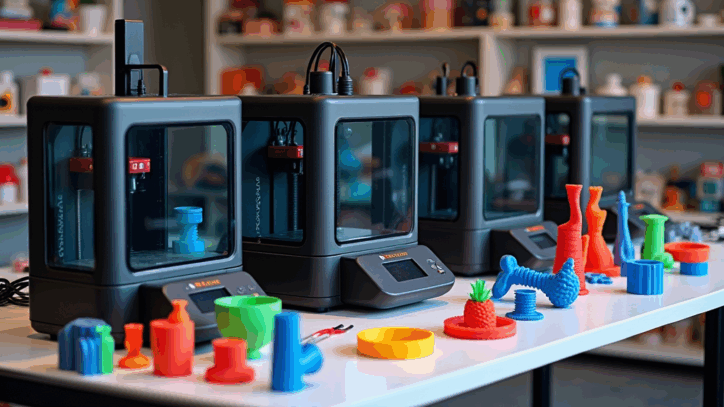
That is exactly where custom 3D printing becomes more than a hobby. It becomes practical.
Custom 3D printed parts and designs are helping people fix real-world problems without waiting weeks for backorders, hunting for discontinued components, or buying an entire replacement product just to solve one small failure point. In many cases, a custom part is not just a substitute. It is a smarter version of the original.
For businesses, makers, homeowners, and inventors, this matters. Time matters. Function matters. Fit matters. And when you already know what needs to be solved, having your model made by 3D Printing by Kevin can be the fastest path from idea to usable part.
Affiliate Disclosure
This post contains affiliate links. If you buy through these links, 3D Printing by Kevin may earn a commission at no extra cost to you. Recommended tools and materials are only mentioned where they genuinely support the job.
What Problems Can Custom 3D Printed Parts Solve?
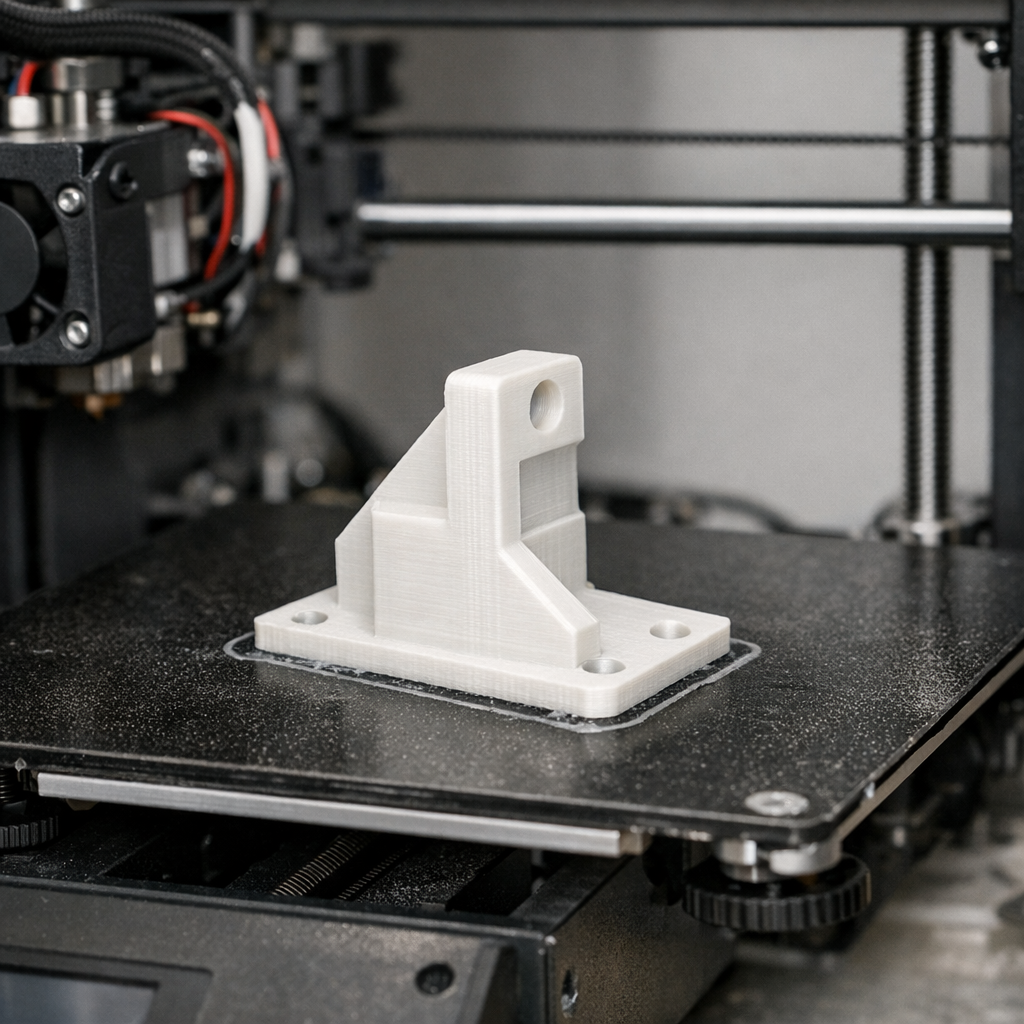
Custom 3D printed parts are ideal for broken plastic components, discontinued replacement parts, one-off prototypes, custom holders, workshop organizers, brackets, clips, and fit-specific designs. They are especially useful when off-the-shelf parts do not exist, do not fit correctly, or cost more than they should.
Why Custom 3D Printing Has Become So Useful
There was a time when custom fabrication sounded expensive, slow, or reserved for engineers in lab coats standing near machines that cost more than a house. Today, desktop 3D printing has changed that equation.
Now, a custom part can be designed, refined, and produced in a way that makes practical sense for ordinary people with ordinary problems. That includes:
- replacement parts for broken plastic pieces
- better-fitting mounts and holders
- small-batch design solutions
- prototypes for new product ideas
- workshop and home organization components
- adapters, spacers, guides, and fixtures
The beauty of custom 3D printing is not that it can make everything. It cannot. That is where a lot of online hype gets wobbly. The real value is that it can make the right things very well when the geometry, material choice, and use case line up.
That is also why experience matters. A custom part that looks right but fails under stress is just a very professional-looking disappointment. A functional part needs the right design, the right print settings, and the right material.
If you are new to this world, start with this guide to 3D printing for absolute beginners. It gives useful context for how the process works and why some parts succeed while others end up as decorative spaghetti.
The Real Problems Custom 3D Printed Parts Solve
Broken Plastic Parts That Should Not Kill the Whole Product
This is the most obvious use case, and still one of the best.
A cracked hinge cover. A snapped battery door. A broken drawer clip. A mounting tab that no longer holds tension. These are small failures with large consequences. They can make a tool awkward, a machine unreliable, or a product nearly unusable.
In many situations, the original manufacturer no longer stocks the part, never sold it separately, or priced it in a way that makes no rational sense. Buying an entire new product because one small molded piece failed is wasteful and expensive.
A custom 3D printed replacement can often restore function quickly, especially when the original part can be measured, modeled, or improved.
And sometimes improved is the key word.
Original plastic components are often designed for mass production, not for durability in your specific use case. A replacement part can be thickened, reinforced, reshaped, or adjusted to better handle the stress that broke the original.
Discontinued Parts That Are No Longer Easy to Find
This is where custom printing starts looking almost magical, minus the wizard beard.
Older appliances, workshop tools, furniture components, specialty equipment, and hobby gear often have parts that simply vanish from the market. Search results become a graveyard of “out of stock,” “discontinued,” or “no longer available.”
If the part is small enough and structurally appropriate for 3D printing, a custom design can bring that object back to life.
That is not just convenient. It is economical. It also reduces waste, which is becoming a bigger selling point for people who want to repair what they own rather than throw it away.
Custom Mounts, Holders, and Everyday Utility Parts
This is one of the most underrated categories.
A good custom part does not always replace something broken. Sometimes it creates a better system from scratch.
Think about wall mounts, cable guides, battery holders, custom brackets, tool holders, shelf organizers, label clip systems, router mounts, vacuum hose adapters, drill charging docks, camera rig attachments, or jigs for repeated tasks. These are the kinds of parts that make a workspace cleaner, faster, and more efficient.
They are also exactly the kind of parts that rarely exist in the exact size or shape you need.
That is where having a custom model made by 3D Printing by Kevin becomes useful. Instead of settling for “close enough,” you get a part built around the actual problem.
Prototype Parts for New Ideas
For inventors, tinkerers, and product developers, custom 3D printing compresses the feedback loop.
You can test fit, size, ergonomics, alignment, and function before sinking money into more expensive manufacturing methods. That matters whether you are developing a consumer product, a packaging insert, a bracket for a machine, or a proof-of-concept assembly.
A prototype does not need to be perfect. It needs to teach you something.
That is one reason custom 3D printed prototypes are so valuable. They help you discover what works, what needs refinement, and what looked brilliant in your head but becomes nonsense once it exists in the physical world.
If design is still the intimidating part for you, this guide on acquiring the skills to design 3D objects using software explains the learning side of the process.
When Custom 3D Printed Parts Make Sense
Not every problem should be solved with a 3D printed part. A wrench is not a spoon. Tools have lanes.
Here is the practical breakdown.
| Situation | Custom 3D Printed Part | Off-the-Shelf Replacement | Buying New Product |
|---|---|---|---|
| Broken small plastic component | Often an excellent option | Great if available | Usually overkill |
| Discontinued part | Often the best option | Rarely possible | Often expensive |
| Custom fit needed | Best option | Usually poor fit | Not relevant |
| Prototype or concept test | Best option | Not applicable | Not applicable |
| High heat or extreme load part | Depends on material and design | Sometimes better | Depends on product |
| Large mass-produced item | Usually not ideal | Better if available | Often more practical |
The point is not to force 3D printing into every situation. The point is to use it where it offers real leverage.
That kind of judgment is part of what separates a functional custom part from a novelty object that fails the first time it gets bumped.
DIY vs. Having 3D Printing by Kevin Make the Part
A lot of people are curious about 3D printing but do not want to become accidental full-time troubleshooting technicians. Fair. Very fair.
Here is the honest comparison.
| Option | Best For | Pros | Cons |
|---|---|---|---|
| DIY 3D Printing | Hobbyists and frequent users | Full control, ongoing learning, long-term flexibility | Requires printer setup, calibration, design skills, material testing |
| Hiring 3D Printing by Kevin | People who want the part solved correctly | Faster path to a usable result, no machine learning curve, custom-fit design help | Less hands-on if you wanted the hobby itself |
If you want to learn the craft, building your own setup can be rewarding. If you want a broken part replaced, a prototype tested, or a custom holder designed without spending weekends chasing adhesion issues, outsourcing makes a lot of sense.
That is especially true when the part needs to be modeled from scratch.
What Goes Into a Reliable Custom Printed Part
A functional custom part is not just about shape. It is about engineering choices, even on a small scale.
Material Choice Matters
PLA is common and easy to print, but it is not always the best choice for heat, outdoor use, or mechanical stress. PETG, ABS, ASA, TPU, nylon blends, and carbon-fiber-filled materials all exist for a reason.
The right material depends on the job.
That is one reason filament quality matters too. If you want consistent, reliable material for functional parts, COEX is worth a look. Their filament is a strong fit for serious makers who care about print consistency, and the coupon code 3DPRINTINGBYKEVIN gives 15% off here: COEX filament.

Print Orientation Matters
A part printed in the wrong orientation can look fine and still fail because the stress is working against the layer structure. That is one of those hidden truths that beginners discover the annoying way.
For a good overview of performance tuning, this post on the calibration trick that makes any 3D printer perform better is essential reading.
Speed Is Not Always Your Friend
Fast printing sounds impressive. Functional printing is more impressive.
When quality, layer bonding, and accuracy matter, slowing down can actually produce a better result. That is especially true for detailed parts, thin walls, precise fits, and higher-strength components.
This article on what happens when you slow your 3D printer down explains why that tradeoff matters in the real world.
Warping and Print Defects Can Ruin a Good Design
A part that lifts, twists, or deforms during printing may never fit correctly, no matter how good the model is. Material handling, bed adhesion, and environmental control all matter.
If you are troubleshooting the print side of the equation, see the easiest way to stop 3D print warping with PLA, PETG, and ABS.
And if a print is failing more generally, this guide on how to fix common 3D printing problems quickly is the right rabbit hole.
How 3D Printing by Kevin Helps Turn an Idea Into a Working Part
The hardest part of custom fabrication is often not the printing. It is getting from vague problem to correct solution.
That process may involve:
- measuring a broken part
- redesigning a weak area
- matching fit against another object
- choosing the right material
- testing clearances and tolerances
- refining the model after the first print
That is where a service-driven approach helps.
Instead of forcing yourself to learn modeling, printer tuning, material behavior, and machine maintenance all at once, you can have your model made by 3D Printing by Kevin and focus on the actual result: a part that fits, works, and solves the problem you started with.
For people who do want to build their own setup, Creality offers a broad range of printers that can get you into functional printing: Creality.
And if you need to capture shapes from existing physical objects, 3DMakerpro can be a smart route for scanning real-world geometry before modeling or refining it: 3DMakerpro Global.
These are not one-size-fits-all solutions. They are tools. Useful tools. But still tools. The magic, such as it is, happens when the design, print settings, and use case stop fighting each other.
Need a replacement part, custom bracket, prototype, or holder designed around your exact problem?
Skip the guesswork and have your model made by 3D Printing by Kevin. A custom part can save time, prevent waste, and solve issues that generic products cannot.
Request a custom quote: Quote/Project/ Intake
Custom 3D Printed Parts Are About More Than Convenience
There is a deeper reason this kind of service resonates.
It restores control.
Instead of accepting that a broken clip kills a useful product, you repair it. Instead of settling for a bad fit, you build the correct one. Instead of imagining a new design forever, you test it in your hands.
That is a shift from passive consumer behavior to practical problem-solving.
And it is one reason custom 3D printing continues to grow in both personal and business use. It fills the gap between “nothing exists for this” and “I need a working solution.”
That gap turns out to be enormous.
Who Should Consider a Custom 3D Printed Solution?
Custom parts are especially useful for:
- homeowners dealing with broken plastic components
- makers who need one-off mounts or adapters
- workshops needing organizers, holders, and fixtures
- inventors testing prototypes
- small businesses solving niche equipment problems
- anyone with a discontinued part that is no longer sold
If that sounds like your situation, a custom-designed part is not a gimmick. It is a practical fix.
And if you are trying to learn the craft yourself, this post on the $15 tool every 3D printer owner should have is a useful next step.
Final Thoughts
The most valuable custom 3D printed parts are not flashy. They are useful.
They restore function. They solve fit issues. They reduce waste. They rescue products from the landfill. They help ideas become real. And they often do it faster than traditional options for one-off or low-volume needs.
That is why this space matters.
A broken bracket may not sound exciting. But when that bracket keeps a machine working, a tool organized, a prototype moving forward, or a product usable again, it becomes a very real solution.
And that is the real promise of custom 3D printed parts and designs: not novelty, but problem-solving.
If you already know what needs fixing, upgrading, or building, having your model made by 3D Printing by Kevin can be the most direct way to get from idea to result.
Stop Searching for Discontinued Parts
Do you have a broken household item, a specialized automotive clip, or a prototype idea that needs to become a reality? Stop wasting time scouring eBay for overpriced used parts.
Contact 3D Printing by Kevin today. I specialize in reverse-engineering broken components and delivering high-strength, custom 3D printed replacements directly to your door.
Quote/Project/ IntakeHave a broken part, discontinued component, or custom design idea?
3D Printing by Kevin can help turn your measurements, sketches, or concept into a real working part.
Start here: Quote/Project/ Intake
FAQ
What types of problems can custom 3D printed parts solve?
Custom 3D printed parts are great for broken clips, brackets, mounts, holders, spacers, adapters, discontinued replacement parts, and early-stage prototypes.
Are custom 3D printed parts strong enough for real use?
They can be, depending on the design, material, print orientation, and intended use. Some parts are excellent candidates for 3D printing, while others require different manufacturing methods.
Is it better to buy a 3D printer or hire someone to make the part?
That depends on your goal. If you want to learn 3D printing as a long-term skill, buying a printer makes sense. If you want a specific part solved quickly and correctly, hiring a service like 3D Printing by Kevin is usually the more efficient route.
Can a broken part be copied if I still have the original?
Often, yes. If the original part can be measured, photographed, or scanned, it may be possible to model and reproduce a working replacement.
What if I only have an idea and not a finished design?
That is exactly where custom design help becomes valuable. A sketch, photo, or explanation of the problem can often be enough to begin developing a workable model.