
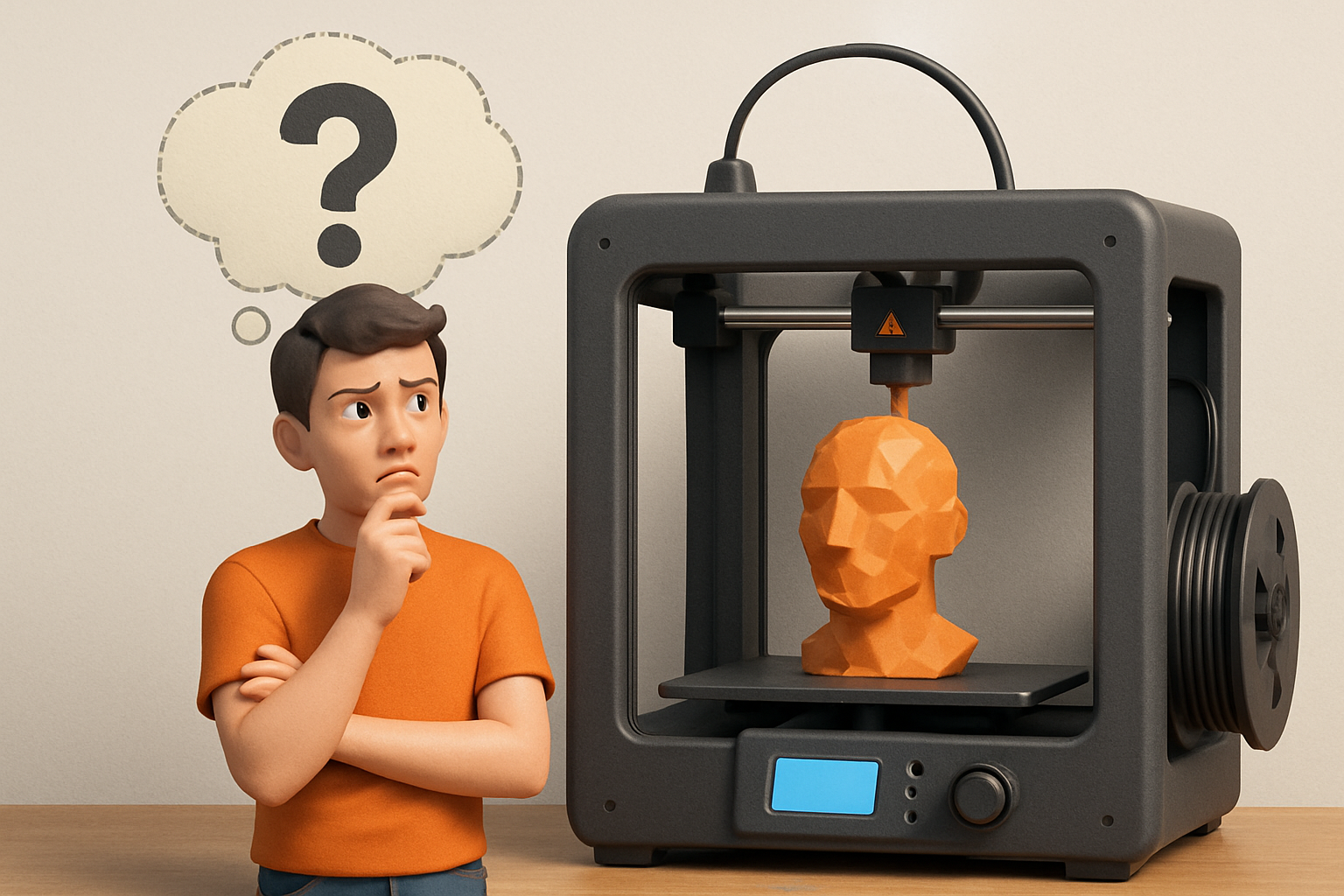
What is the biggest myth holding back beginner 3D printing enthusiasts? The most damaging myth is the belief that high-quality, functional 3D printing requires an engineering degree and a five-figure investment in industrial equipment. In reality, modern “prosumer” hardware and intuitive software have lowered the barrier to entry, allowing beginners to produce professional-grade parts with affordable desktop machines and high-quality filaments.
Affiliate Disclosure: This post contains affiliate links. If you purchase through these links, I may earn a commission at no additional cost to you. I only recommend products from trusted partners like Creality, 3DMakerpro, COEX, and Hong Kong Chaorong.
The Barrier to Entry is No Longer Technical
Many prospective makers hesitate to enter the world of additive manufacturing because they believe the learning curve is a vertical wall. They assume that unless they are experts in CAD (Computer-Aided Design) or mechanical engineering, their printer will simply collect dust.
This misconception ignores the massive leap in “out-of-the-box” reliability seen in recent years. Manufacturers have moved away from the era of “kit-bashing,” where every machine required hours of manual leveling and firmware flashing before the first print.
Ready to Start?
If you are looking for a machine that balances performance with user-friendly features, Creality offers some of the most reliable entry-level and mid-range printers on the market today.
The “Cheap Printer” Fallacy
Transitioning into the hardware discussion, beginners often fall into one of two traps: buying the absolute cheapest machine available or overspending on features they do not yet understand.
The myth suggests that “budget” means “bad.” However, the current market proves that brands like Creality have perfected the balance of affordability and precision. The key is not the price tag, but the ecosystem. When you invest in a proven platform, you gain access to a global community of users, spare parts, and optimized profiles.
Moving Beyond Simple Downloads: The Power of 3D Scanning
Another myth holding beginners back is the idea that they are limited to printing what other people have designed. Beginners often think 3D modeling is the only way to create custom parts.
This is where 3D scanning changes the game. Instead of spending weeks learning complex mesh topology, you can digitize real-world objects in minutes. This effectively bridges the gap between physical reality and digital manufacturing.
This is where 3D scanning changes the game. Instead of spending weeks learning complex mesh topology, you can digitize real-world objects in minutes. This effectively bridges the gap between physical reality and digital manufacturing.
Precision Digitalization
For high-accuracy 3D scanning that integrates seamlessly with your workflow, 3DMakerpro provides industrial-grade precision at a consumer price point.
Material Quality: The Hidden Success Factor
Even with the best printer, many beginners struggle because they believe all filament is created equal. This “commodity myth” leads users to buy the cheapest mystery plastic they can find, resulting in clogs, warping, and failed prints.
To achieve consistent results, your material choice is just as important as your hardware settings. High-quality filaments offer tighter diameter tolerances and better chemical purity.
For enthusiasts who prioritize American-made quality and consistent performance, COEX 3D Printing offers premium filaments designed for those who need their prints to work the first time, every time.
Recommended Internal Links for 3DPrintingByKevin.com
To maximize your SEO and keep readers on your site, I recommend hyperlinking the following phrases to your existing content:
Best Beginner 3D Printers: Link this when discussing the barrier to entry.
3D Printing Troubleshooting Guide: Link this when discussing failed prints and material quality.
Recommended Internal Links for 3DPrintingByKevin.com
To maximize your SEO and keep readers on your site, I recommend hyperlinking the following phrases to your existing content:
-
Best Beginner 3D Printers: Link this when discussing the barrier to entry.
-
3D Printing Troubleshooting Guide: Link this when discussing failed prints and material quality.
-
How to Set Up Your First Printer: Link this in the intro to encourage new users.
Fact-Safe Comparisons
|
Feature |
The Myth |
The Reality |
|---|---|---|
|
Ease of Use |
Requires coding knowledge |
Plug-and-play with auto-leveling |
|
Cost |
Thousands of dollars |
Professional results under $500 |
|
Design |
Must learn CAD |
Can use 3D scanners or repositories |
|
Materials |
Any plastic works |
Quality filament reduces failure by 70% |
Frequently Asked Questions
Is 3D printing too expensive for a hobby?
No. With the advent of brands like Creality, you can get started with a highly capable machine for less than the cost of a modern gaming console.
Do I need to know how to code?
Absolutely not. Modern slicing software like Cura or Creality Print handles the “coding” (G-code) for you through a visual interface.
Conclusion,
The only thing truly holding beginners back is the misconception that the technology is out of reach. By choosing the right ecosystem—whether that is the reliability of Creality hardware, the precision of 3DMakerpro scanners, or the high-grade materials from COEX—you can skip the frustration and go straight to creating.